The complete guide to Retail Promotion Management for 2025 and beyond

Table of content

Key insights

  • Data-driven strategies and AI are transforming how retailers plan and optimize promotions.
  • Breaking down silos and fostering collaboration with internal teams and vendors unlocks greater efficiency and campaign success.
  • Promotion management aligns marketing efforts with business goals to drive profitability.
  • Measuring and optimizing promotions ensures continuous improvement and ROI.

What is promotion management?

Promotion management is a strategic process designed to improve business operations and profitability by ensuring all promotional activities align with broader business goals. Promotion management involves planning, executing, tracking, and providing analytical insights about the promotional activities to achieve specific marketing and sales goals.

It encompasses setting clear promotional objectives, budgeting, engaging with vendors, coordinating with internal teams, and monitoring results to optimize performance. Effective promotion management aims to enhance customer engagement, drive sales, and ensure promotional activities align with overall business objectives.

For example

a retailer might implement a promotion management strategy for a seasonal campaign, including a discount sale, loyalty rewards, and special in-store events. This strategy would involve collaboration between marketing, inventory, sales teams, and vendors to ensure the promotions are effectively communicated, stock levels are adequate, and customer response is monitored and analyzed.

Key benefits of promotion management

  • Improved collaborative planning: An effective promotion management process requires bringing data to a single place to make it more accessible to all departments involved (marketing, sales, finance, merchandising), laying the foundation for a better collaborative environment.
  • Single source of truth for promotions: By consolidating all promotion data into a unified system, retailers eliminate silos and ensure every team is working with accurate, clean, and consistent information. This fuels smarter decision-making, streamlines vendor collaboration, and reduces errors caused by fragmented or outdated data.
  • Strategic resource management: Managing your promotions systematically leads to an enhanced promotional budget allocation, while optimizing targeting efforts to create less promotional waste and maximize ROI. A systematic approach helps optimize inventory management by forecasting demand. 
  • Promotion performance evaluation: A good promotion management model requires establishing clear objectives and metrics to evaluate performance. During that process, the retailer can track, collect, and analyze available data to run a few A/B tests and end up with a good promotional formula to be followed for boosted ROI.
  • Data-driven decision-making: By creating a foundation of data and insights, retailers can make smart decisions based on what the analysis showed to be working, which can result in more effective and profitable promotional strategies and set the stage for long-term strategic planning.
  • Competitive advantage: Offering enticing promotions can lead price-conscious consumers to take the opportunity and make the purchasing decision more often, capturing a bigger market share from competitors by offering superior deals on similar products.

Real-world impact:

A North American grocery customer with 1M+ SKUs faced challenges in measuring the true impact of its promotions across digital and physical channels. By implementing an AI-powered analytics tool, the retailer was able to consolidate fragmented data, accurately attribute sales uplift, and optimize future promotional campaigns. This led to a 20% increase in conversion rates and a significant reduction in budget wastage of 25%.

Key components of the promotion management process

  • Promotion planning: The first phase of promotion planning involves defining the goals and objectives of the promotions, developing the strategy to execute it, and creating the promotional calendar. 
  • Deal management: It includes the allocation of the budget dedicated to managing trade agreements and contracts and driving promotional effectiveness while safeguarding financial and contractual compliance.
  • Optimization: Utilizing data and Machine Learning-powered models to improve the promotion strategy and resource allocation process, enhancing the overall promotion effectiveness.
  • Execution: Implementing the agreed-upon strategies and turning them into actual promotions, managing inventory and signage placements, while ensuring performance tracking and sales data monitoring.
  • Data analysis: Monitor promotion performance and gain analytical insights that help understand what works and what does not. Additionally, this helps identify items and categories prone to cannibalization.

Main challenges in promotion management

1- Direct recommendations generated by AI-powered tools

A promotion budget is a specific amount of money set aside to promote a business or organization’s products or beliefs. Effective allocation of funds requires considering factors like business size, target market, and industry competition. 

Budget constraints pose a significant challenge when managing promotions. Limited funds and rising promotional costs demand careful budget allocation, strategic prioritization, and accurate forecasting to achieve strong returns on investment (ROI). Retailers must navigate fluctuating costs associated with advertising channels, vendor negotiations, and promotional materials, all of which significantly impact overall spending.

Effective promotional budgeting involves:

  • Setting realistic spending caps
  • Closely tracking promotional expenses
  • Continuously evaluating the effectiveness of budget allocations.

Key financial metrics retailers should monitor include Incremental Sales lift, Return on Advertising Spend (ROAS), and Cost Per Acquisition (CPA),  Regular analysis of these metrics allows retailers to make data-driven adjustments, optimize promotional spend, and improve budget efficiency.

Methods for determining a promotion budget:
  • Percentage of Sales: Allocate a fixed percentage of sales revenue to the promotional budget. 
  • Competitive Parity: Match or exceed competitor spending on promotional activities. 
  • Objective and Task: Determine objectives and then estimate costs associated with the necessary tasks to achieve them. 
  • Affordable Method: Allocate what the company can afford after covering other expenses. 


The amount retailers allocate to promotion management varies based on factors like business size, market position, strategic goals, and available resources. Larger retailers with strong revenues may dedicate bigger budgets to boost market share or maintain brand awareness, while smaller businesses often take a more cautious approach depending on what they can afford.

Furthermore, industry trends, competition, and consumer behavior also play a key role in determining promotional spending. Customizing the promotional budget to fit these specific factors helps retailers maximize their return on investment and ensures marketing efforts support their overall business goals.

2- Maintaining channel consistency

Omnichannel retail is a strategy that integrates various digital and physical channels to create a unified and consistent customer experience. It aims to provide customers with flexibility to shop, browse, and interact with a brand seamlessly across different touchpoints like online, in-store, and mobile. 

Retailers face the challenge of delivering uniform messages and experiences across these diverse touchpoints in order to allow Customers to seamlessly switch between channels without restarting their shopping journey, allowing them to research online and purchase in-store, for example. 

3- Measuring promotion effectiveness

Accurately tracking the success of promotions is often challenging. Without reliable tools and metrics, retailers risk wasting resources and failing to identify opportunities to refine and improve their promotional strategies.

Complexities like data fragmentation, attribution issues, and technology gaps make it difficult to assess true performance. Overcoming these challenges is key to optimizing promotional strategies and driving growth:

  • Data Fragmentation: Retailers often struggle to consolidate data from multiple sources (e.g., online sales, in-store transactions, loyalty programs) to get a comprehensive view of promotion performance.
  • Attribution Complexity: It’s challenging to accurately attribute sales uplift or customer engagement to specific promotional activities, especially when multiple campaigns overlap or consumers interact across various channels. 
  • Lagging Data: Performance data may not be available in real time, delaying analysis and making it harder to adjust campaigns proactively. 
  • Lack of Standardized Metrics: Retailers and vendors might use different metrics (e.g., ROAS, conversion rate, incremental sales), making consistent evaluation difficult.[Icon]
  • External Factors Influence: Variables like seasonality, economic shifts, or competitor actions can skew performance results, complicating the isolation of promotion-driven impact.
  • Customer Behavior Complexity: Tracking how promotions influence different customer segments (e.g., new vs. loyal customers) requires sophisticated analytics, which many retailers lack.
  • Technological Limitations: Retailers may not have advanced analytics tools or integrated systems, resulting in limited insights and inaccurate performance measurement.

Retailers must accurately evaluate promotions to ensure resources are well-spent and strategies continuously improved. Key metrics to measure promotion effectiveness include sales uplift, customer acquisition rates, conversion rates, customer retention rates, and return on promotional investment (ROPI).

4- Vendor collaboration challenges:

Promotion vendor collaboration is a strategic partnership between retailers and their suppliers aimed at maximizing the success of promotional activities. By aligning objectives, exchanging valuable insights, and cooperating closely on campaign planning and execution, both parties strive to enhance efficiency throughout the supply chain, elevate product offerings, and stimulate innovative solutions.

However, retailers frequently encounter several key challenges when collaborating with vendors in promotion management:

  • Misalignment of Objectives: Retailers and vendors often have differing business priorities and objectives. Retailers might prioritize customer loyalty, brand image, and inventory turnover, whereas vendors typically aim to maximize their product visibility and sales volume. This disparity can cause friction and hinder cohesive promotional strategies.
  • Communication Gaps: Effective vendor collaboration demands clear, continuous, and transparent communication. However, barriers like inconsistent communication, delays, or incomplete information sharing often arise, leading to mismanaged promotions and missed opportunities.
  • Limited Visibility and Transparency: Vendors and retailers may have different systems and data-sharing capabilities. A lack of integrated technology can limit visibility into inventory levels, promotional results, sales forecasts, and real-time data analytics, complicating informed decision-making.
  • Negotiation and Conflict Resolution: Negotiating promotional terms, such as funding contributions, discounts, and promotional timing, can become contentious. Differences in negotiating power or conflicting interests may lead to drawn-out negotiations, delays, or ineffective promotional agreements.
  • Inventory Management Issues: Poor synchronization between vendor supply chains and retailer inventory planning can result in stockouts or overstocks during promotional periods. Accurate forecasting and timely replenishment are essential but often challenging when collaboration isn’t streamlined.
  • Performance Measurement Disagreements: Retailers and vendors may disagree on how to measure promotion success, which metrics matter most, and who is accountable for specific outcomes. Without clearly defined performance metrics agreed upon by both parties, evaluating promotional effectiveness becomes difficult and subjective.
  • Inconsistent Promotional Execution: Ensuring that promotional guidelines and branding requirements are consistently followed across all channels can be problematic. Vendors and retailers might differ in their adherence to promotional terms, leading to inconsistent messaging and customer experiences.
  • Technological Integration Challenges: The integration of vendor and retailer technology platforms for seamless collaboration can pose substantial challenges. Disparate systems can prevent the real-time sharing of data necessary for optimal promotional management.

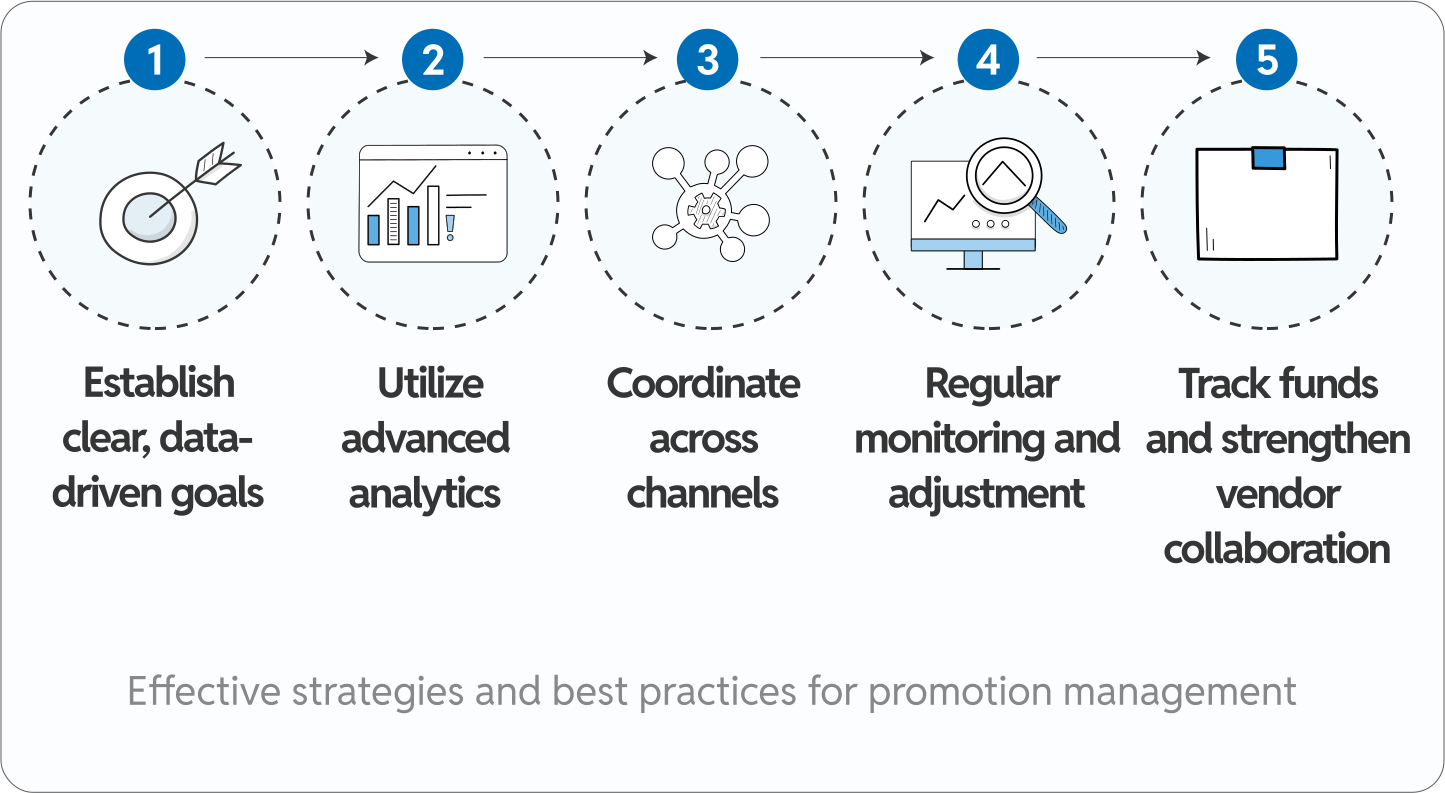
Effective strategies and best practices for promotion management:

1. Establish clear, data-driven goals

Setting specific, measurable goals ensures promotional activities align with broader business objectives. Goals should be realistic, clearly defined, and supported by historical and predictive data analysis.

2. Utilize advanced analytics

Using sophisticated analytical tools enables retailers to gain valuable insights from extensive datasets. This helps forecast performance accurately, optimize promotional budgets, and refine targeting strategies.

3. Coordinate across channels

An integrated approach to promotional channel management ensures consistent messaging and improved customer experience. Collaboration among marketing, sales, and inventory management teams creates cohesive promotional strategies.

4. Regular monitoring and adjustment

Ongoing monitoring and analysis allow retailers to quickly respond to market trends and consumer feedback. This proactive approach ensures promotions remain effective, relevant, and efficient.

5. Track funds and strengthen vendor collaboration

Promotions often rely on vendor funding, trade allowances, or joint marketing investments. Establishing transparent systems to track promotional funds ensures accountability, prevents budget leakage, and helps retailers maximize co-op dollars. At the same time, closer collaboration with vendors—through shared data, clear objectives, and aligned incentives—improves campaign execution, drives stronger results, and builds long-term partnerships.

6. Link promotions to inventory management

Effective coordination between promotional planning and inventory forecasting prevents inventory issues such as shortages or excess stock. This integration helps enhance customer satisfaction and optimizes inventory usage.

Cognira’s holistic approach to promotion management

At Cognira, we tackle promotion management as a complex, data-intensive, and cross-functional discipline that requires more than spreadsheets and siloed decision-making. Our solution is purpose-built to address every stage of the promotion lifecycle through a unified, intelligent, and scalable platform—empowering retailers to maximize the ROI of their promotional investments while ensuring operational alignment and executional excellence.

1. Strategic promotion planning & calendar optimization

The journey begins with a centralized planning environment where retailers can build, align, and manage their annual or seasonal promotion calendars. Our system integrates with upstream financial plans and downstream execution systems, allowing stakeholders to visualize timing overlaps, category conflicts, and capacity constraints.

Key capabilities:

  • Hierarchical calendar views (week, event, season)
  • Cross-category conflict detection
  • Integration with financial targets and assortment plans
  • Scenario modeling and “what-if” simulations


2. Offer design and personalization with PromoAI

Designing the right offer mix is no longer guesswork. Powered by AI, our solution enables data-driven offer creation based on customer behavior, product performance, historical uplift patterns, and market signals.
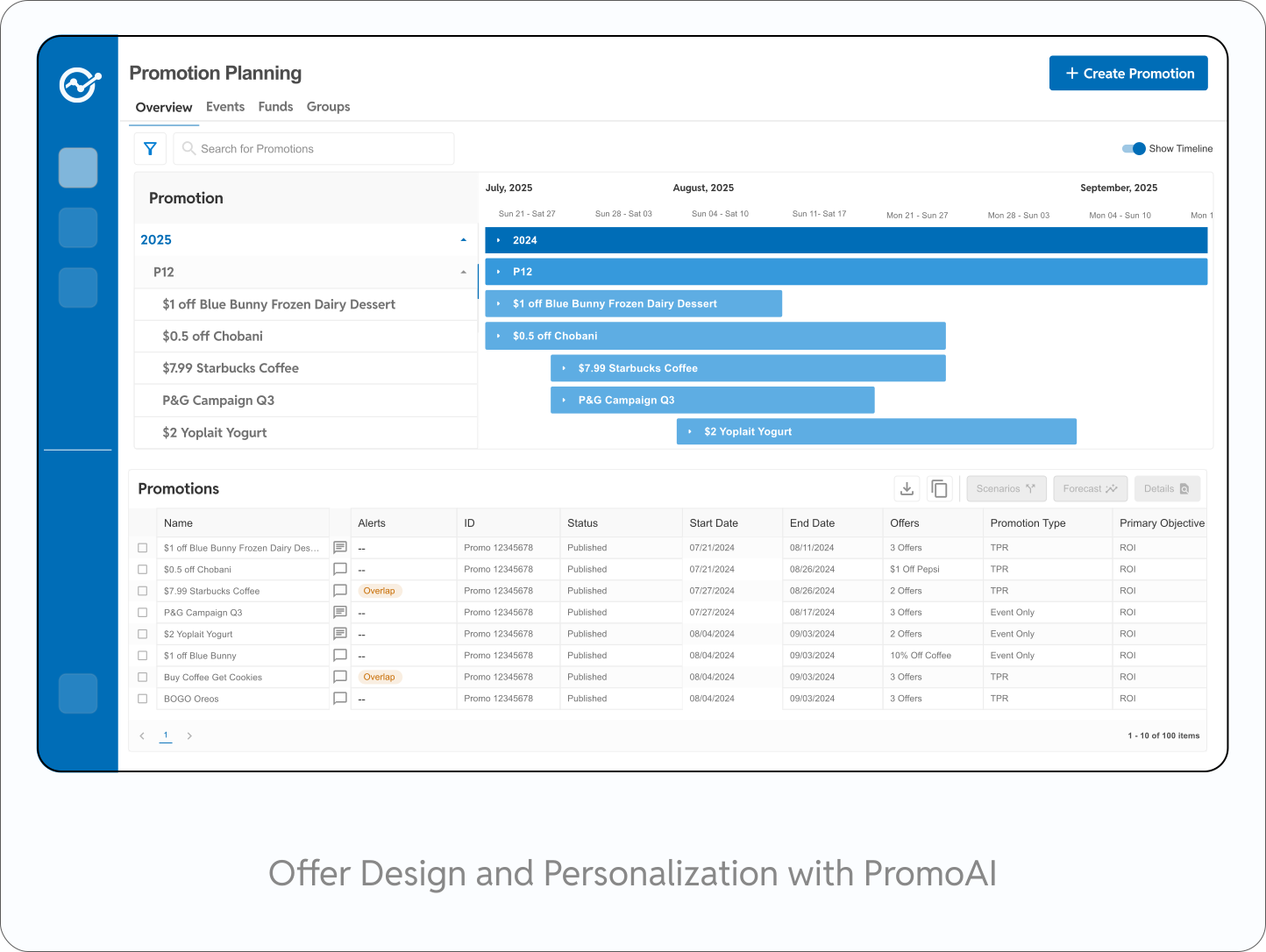
 

Some technical features include:

  • Mass market targeting: Maximize reach with broad campaigns like circulars or flyers while still using AI to select promotions with the widest appeal. Target the right products for the most customers and make your mass promotions more strategic and effective.
  • Customer segment targeting: Plan email or targeted marketing events tailored to specific customer groups. Our AI analyzes past purchase behavior and preferences to recommend promotions that resonate with the majority of a given segment—perfect for themed content and lifestyle-based engagement.
  • Individual-level targeting: Deliver hyper-personalized offers directly through your digital commerce platform. PromoAI identifies the most relevant promotions for each shopper and ranks them based on their likelihood to redeem—ensuring high-visibility offers that drive action and repeat engagement.

Whether it’s a national discount, localized offer, or loyalty-based incentive, our platform helps craft high-impact promotions tailored to both margin objectives and customer engagement- while keeping your promotion management efforts aligned with strategic goals.

3. Granular forecasting of promotional impacts:

Cognira’s PromoAI goes beyond surface-level predictions by analyzing promotions, events, and store activity to deliver a comprehensive, multi-level forecasting view. It enables retailers to understand and anticipate the impact of promotions with precision—whether at a broad campaign level or down to individual SKU-store-week combinations.

Forecasting across multiple levels:
• Promotion
• Ad event
• SKU-store-week

Factoring in rich promotional features:
• Discount type (e.g., $ off, % off, BOGO)
• Offer mechanics
• Display type (e.g., sticker, sign)
• Event type (e.g., ad, display, coupon)
• Placement (e.g., front page vs. inside flyer)

Accounting for complex effects:
• Halo and cannibalization modeling
• Promo transference across clusters and channels

This forecasting depth empowers users to simulate outcomes, evaluate strategies, and drive more effective, margin-protecting promotions.

4. Execution alignment & workflow automation

Executing a promotion involves multiple teams—merchants, supply chain, marketing, and stores. Cognira provides a collaborative environment with role-based workflows, approval chains, and data versioning. Promotion briefs, visual assets, forecast data, and performance expectations are all housed in one shared ecosystem.

Capabilities include:

  • Role-based access and cross-team collaboration.
  • API integrations with ERP, POS, pricing, and marketing systems.
  • Automated alerting for inconsistencies or approval bottlenecks.

This ensures that from planning to store execution, every stakeholder is aligned, reducing delays and miscommunications, and inefficiencies in managing promotions at scale.

5. Post-event analysis & continuous optimization

Every promotion is a learning opportunity. Our analytics module consolidates performance data across dimensions—category, location, segment, time—and maps it back to pre-event expectations. Using AI-based attribution models, we isolate the true drivers of performance and feed this intelligence back into future planning cycles.

Post-event capabilities:

  • KPI dashboards (sales lift, unit velocity, margin contribution, etc.)
  • Baseline recalibration and uplift variance decomposition
  • Machine learning-based event attribution

Over time, Cognira’s feedback loop helps retailers refine offer structures, targeting logic, and calendar strategies—transforming promotion management into a precision science.

Download this guide?

Conclusion

Effective promotion management in 2025 demands strategic planning, technological innovation, and continual optimization. By addressing key challenges, adopting new trends, and implementing best practices, retailers can significantly improve the effectiveness of their promotions, enhance customer engagement, and foster sustainable growth.

FAQs

Q1: What is the main goal of promotion management?

The main goal is to strategically plan, execute, and measure promotional campaigns to drive sales, increase customer engagement, and align with business objectives.

Retailers use key metrics such as sales uplift, return on advertising spend (ROAS), customer acquisition rates, and conversion rates. Advanced analytics and attribution modeling help isolate the impact of promotions.

AI enhances promotion management by predicting demand, segmenting customers, personalizing promotions, and automating campaign optimization, leading to better targeting and higher ROI.

Alignment ensures sufficient stock availability during promotions, prevents stockouts or overstocks, and enhances customer satisfaction while optimizing inventory turnover.

Common methods include allocating a percentage of sales, matching competitors’ spending, using objective-task budgeting, or basing the budget on available funds. The choice depends on business size, strategy, and market conditions.

Challenges include misaligned goals, communication gaps, data transparency issues, inventory management difficulties, and inconsistent promotional execution.