Promotions are a crucial part of retail, but many fail to deliver a positive return on investment. Too often, retailers rely on slashing prices or running ad hoc deals without a clear strategy. This approach is inefficient: between 30% and 40% of retail promotions are either unprofitable or actively undermine the retailer’s bottom line, according to research from the Boston Consulting Group (BCG).
The consequence is a cycle of low ROI and alienated customers, overwhelmed by choices. This guide is dedicated to breaking that cycle.
Successful retail promotion planning depends on a thoughtful, data-driven approach, not just on discounts. By strategically designing a promotional calendar, retailers can boost profitability, improve customer engagement, and make every marketing dollar count.
What is Promotion Planning?
Promotion Planning
In retail, promotion planning is the process of designing, scheduling, and coordinating promotional activities to achieve specific business goals, such as driving sales, boosting traffic, or increasing brand visibility. It involves selecting the right products, timing, discount levels, and channels to ensure each promotion supports overall merchandising and pricing strategies.
How Promotion Planning fits into the Promotion Management Lifecycle?
Promotion planning is the first and most strategic phase of the broader promotion management lifecycle. Before any promotion can be executed, optimized, or analyzed, retailers must establish the objectives, product focus, timing, and cross-functional alignment that will guide the entire promotional process.
At this stage, retailers:
- Set clear, data-backed objectives aligned with financial and commercial targets
- Select the right products and categories, based on performance, seasonality, and customer behavior
- Build the promotional calendar, identifying timing, duration, and channel mix
- Coordinate teams and resources, ensuring alignment between merchandising, marketing, finance, supply chain, and vendors
Because this phase sets the foundation for everything that follows, the quality of promotion planning directly impacts the promotion effectiveness, profitability, and operational smoothness of the entire promotional strategy. Strong planning reduces last-minute changes, prevents execution issues, and ultimately improves ROI.
Promotions don’t happen in isolation. They’re part of a broader flow that spans deal management, AI-driven optimization, and post-event insights. Explore our comprehensive breakdown of the end-to-end lifecycle.
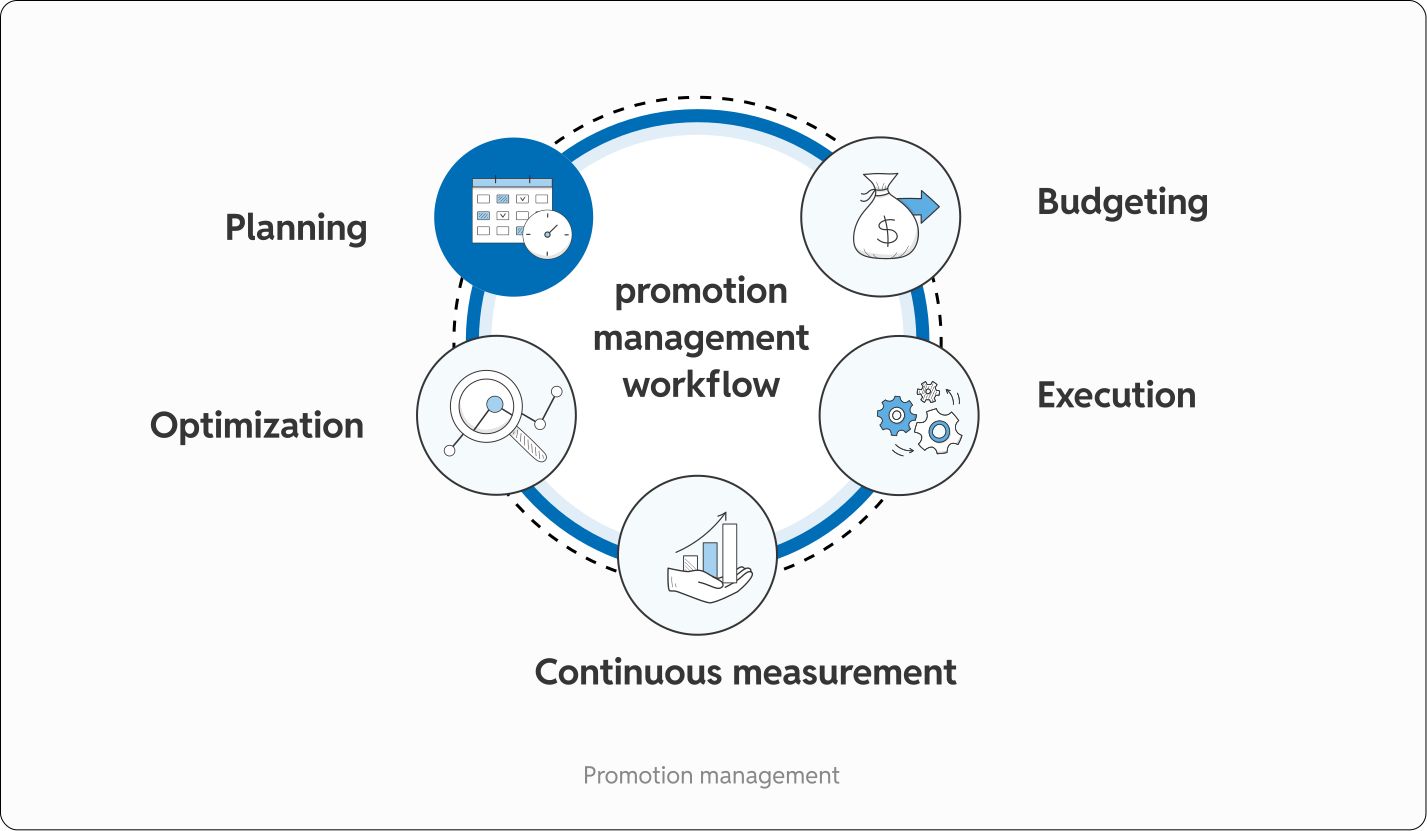
Learn more in The Complete Guide to Retail Promotion Management for 2025 an Beyond
Why Promotion Planning matters now more than ever
Promotions consume a significant share of retail resources, including budget and staffing. Yet many promotions generate little to no noticeable sales lift, and some can even hurt margins because the extra sales don’t sufficiently offset the cost of the discount and associated expenses. In many cases, promotional sales simply shift purchases that would have happened anyway, rather than driving new revenue. This combination of heavy investment and frequent inefficiency puts pressure on profitability and can erode pricing power if shoppers become conditioned to wait for discounts.
Unpacking Retail Promotion Planning pain points
Retail promotions aren’t handled by just one team, they touch almost every corner of the business. Merchandising, marketing and supply chain all have a role to play. That means multiple handoffs, each carrying the risk of miscommunication or delay.
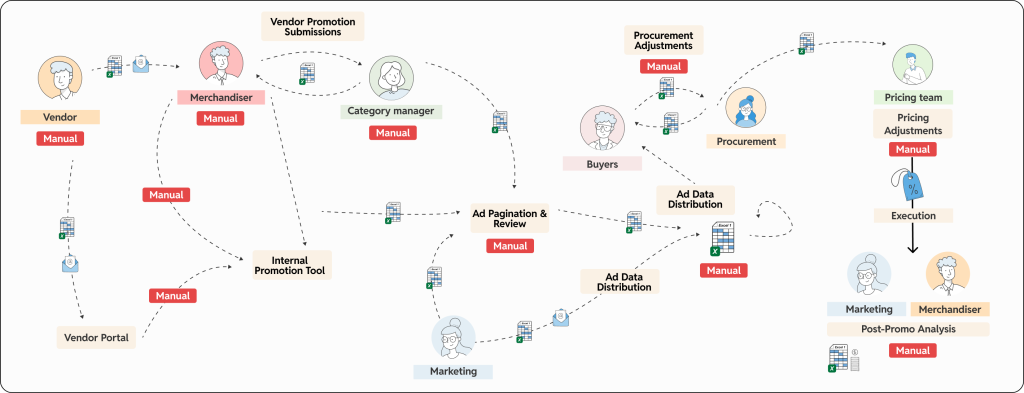
The reality is that the workflow remains heavily manual. From vendor submission and selection to ad planning, execution, and analysis, teams rely on emails and spreadsheets to move promotions forward. This creates a fragmented process with no single source of truth, just scattered files and endless threads.
Manual processes and weekly meeting cycles lead to late price updates, missed ads, and incorrect procurement orders. Even worse, post-promo analysis is also manual, slowing measurement and learning and making it difficult for retailers to refine their promotional calendar with each campaign.
Learn more about promotional calendars and their key uses
Beyond the time and effort lost in such workflows, fragmentation poses substantial financial risks for retailers, with estimates suggesting losses of up to 5% of their operating margin from in-store inefficiencies alone.
In short, the most common pain points in Promotion Planning are:
- Siloed systems – Disconnected tools make it difficult to align Marketing, Merchandising, and Vendor activities.
- Manual processes – Spreadsheets and manual workflows slow down planning and increase the risk of errors.
- Limited visibility – Retailers often lack a clear view of promotion performance across channels and categories.
- Poor collaboration – Misalignment between teams and vendors can lead to overlapping offers or inconsistent campaigns.
Top 5 Promotion Planning mistakes that cost retailers millions
Even experienced retailers can stumble. Here are the top pitfalls to avoid:
- Relying only on discounts – Focusing solely on price cuts can harm margins and train customers to wait for sales instead of buying at full price.
- Ignoring data and insights – Skipping historical analysis or customer behavior studies leads to poorly targeted promotions that may fail to meet goals. Research shows that poor data management can wipe out 20-30% of annual revenue, while Gartner estimates that bad data quality costs companies $12.9 million each year, a clear sign that data-driven promotion planning isn’t optional.
- Poor cross-team coordination – When merchandising, marketing, and supply chain work in silos, offers can overlap, deadlines can be missed, and execution errors increase.
- Neglecting budgets and ROI – Running promotions without clear budgets, margin checks, or ROI forecasts can quickly turn campaigns unprofitable.
- Skipping evaluation and learning – Failing to review results prevents teams from refining future promotions, repeating successes, and avoiding repeated mistakes.
The 8-Step guide to winning Retail Promotion Planning
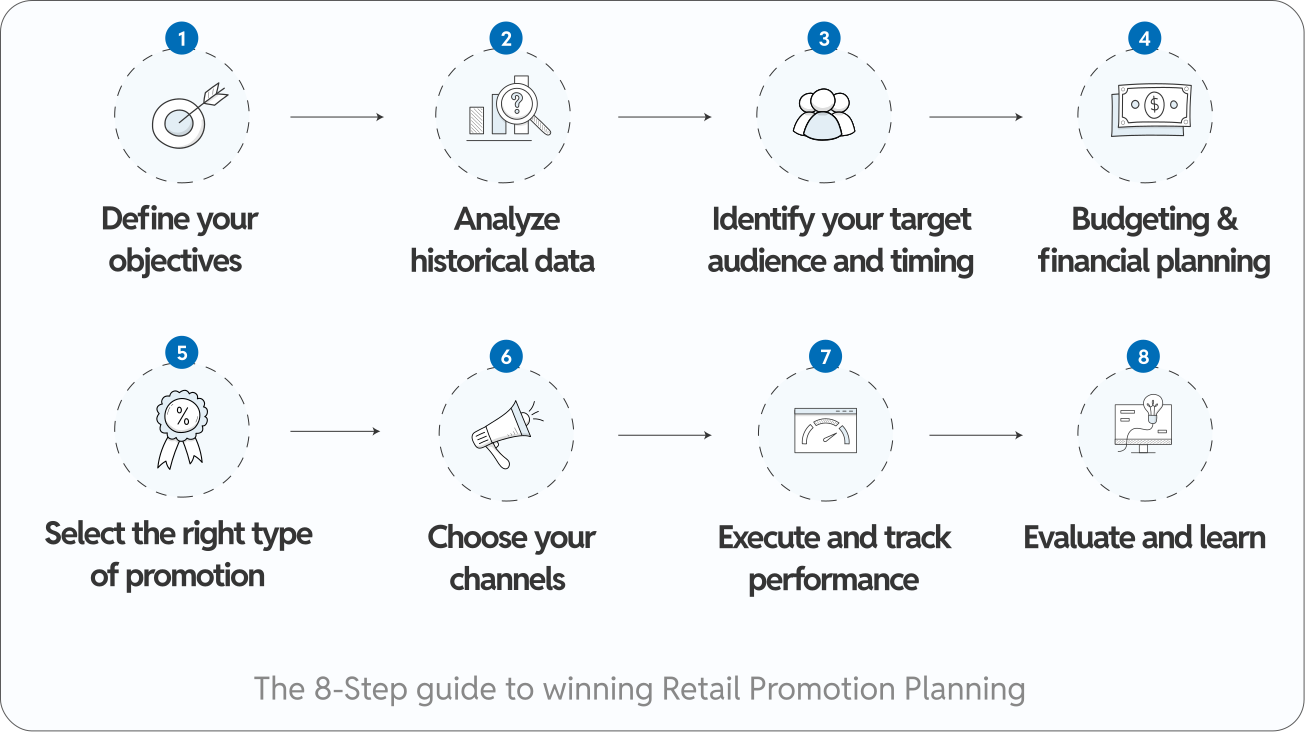
 Step 1: Define your objectives
- Set SMART goals: Instead of vague aims like “increase sales”, create objectives that are specific, measurable, achievable, relevant, and time-bound.
- Go beyond sales: Include objectives like attracting new customers, clearing old inventory, or increasing brand awareness. Clear goals form the foundation of a successful retail promotion plan.
 Step 2: Analyze historical data
- Review past campaigns: Understand what worked and what didn’t in previous promotions. Examine historical data and trends to identify patterns.
- Leverage technology: Advanced analytics and machine learning help retailers forecast demand, optimize budgets, and make informed decisions for more effective data-driven promotions.
 Step 3: Identify your target audience and timing
- Know your customer: Different segments respond to different promotions. Understanding your audience ensures your offers are relevant.
- Create a promotional calendar: Align promotions with key dates, such as holidays, back-to-school, or industry-specific events.
- Time it right: Use data to plan promotions accurately. Local forecasts may need just a week’s lead time, while international sourcing could require months of preparation.
 Step 4: Budgeting & financial planning
Effective promotion planning isn’t just about timing or creativity—it’s also about finances. Setting budgets, monitoring margins, and forecasting ROI ensures each promotion is profitable and strategically aligned.
Key elements to consider:
- Funding allocation: Assign budgets to each promotion and track how much is available.
- Vendor contributions: Include vendor co-op or trade funds in your planning to maximize resources.
- Margin checks: Make sure discounts or deals don’t erode profitability.
- ROI forecasting: Estimate expected returns and adjust plans to prioritize high-impact promotions.
 Step 5: Select the right type of promotion
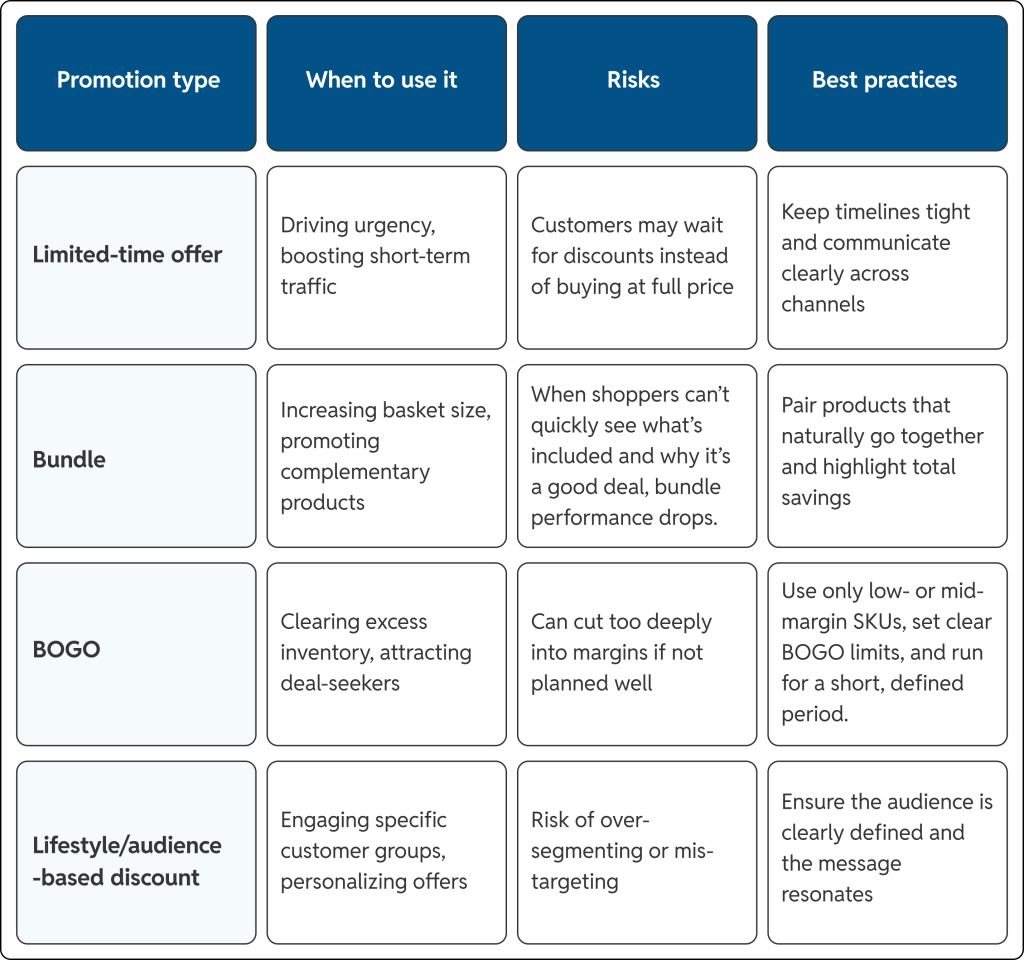
Go beyond basic discounts: Stand out with creative promotions, such as:
- Limited-time offers: Flash sales or special event discounts.
- Bundles: Combine products to increase average transaction value.
- BOGO: “Buy one, get one free” clears stock while creating value perception.
- Lifestyle discounts: Personalized promotions targeting students, pet owners, or tech enthusiasts.
Offer value, not just a price cut: The perception of a deal can be as impactful as the discount itself in retail promotion planning.
Here’s a quick guide to common promotion types—their ideal use cases, risks, and best practices:
 Step 6: Choose your channels
- Adopt an omnichannel approach: Integrate promotions across stores, e-commerce, mobile apps, and social media.
- Pick the right mix: Different channels support different goals.
 Step 7: Execute and track performance
- Align your team: Ensure merchandising, marketing, and operations work cohesively to execute promotions effectively.
- Monitor in real-time: Track promotion performance as it happens to make timely adjustments.
- Test and adjust: Online stores can A/B test messages or discounts. In-store promotions can launch in smaller batches and scale based on initial results
 Step 8: Evaluate and learn
- Measure key metrics: Focus on metrics that matter—foot traffic, average transaction value, and repeat purchases—not just vanity numbers.
- Analyze results: Identify what worked and what didn’t, eliminate underperforming promotions, and reinvest in high-impact campaigns. Continuous evaluation strengthens future retail promotion plans.
Key Takeaways:
- Define success before you start, SMART goals bring structure & clarity.
Past performance isn’t just history, it’s your strategy blueprint - Identify your target audience to ensure promotional relevance and create a strategic calendar to align timing with key events and logistical needs.
- Align your promotions with your financial goals. Planning with budgets, margins, and ROI in mind helps ensure every campaign contributes positively to the bottom line.
- Diversify your promotional offers beyond simple price cuts, focusing on creative formats to maximize perceived value and achieve specific business goals.
- Execute promotions using an omnichannel approach that strategically integrates the appropriate mix of platforms to achieve diverse goals.
- Align your internal teams and monitor promotion performance in real-time to allow for immediate testing, adjustment, and effective scaling.
- Measure crucial metrics and analyze results rigorously to identify successes and failures, continuously learning to optimize future retail promotion plans.
But the reality is, even with a clear plan, traditional workflows create blind spots, slow decisions, and make consistent planning difficult.
That’s why retailers need to move beyond traditional methods and adopt a promotion planning solution that replaces scattered files and manual workflows with structure, visibility, and accuracy. It saves time, helps teams plan earlier, align better, and make data-driven decisions, creating a single environment where promotions are easier to manage and more likely to deliver the intended outcomes.
Key features to look for in a Promotion Planning tool
Before selecting a solution, it’s essential to understand the top features that define an effective, modern promotion planning tool.
Centralized planning
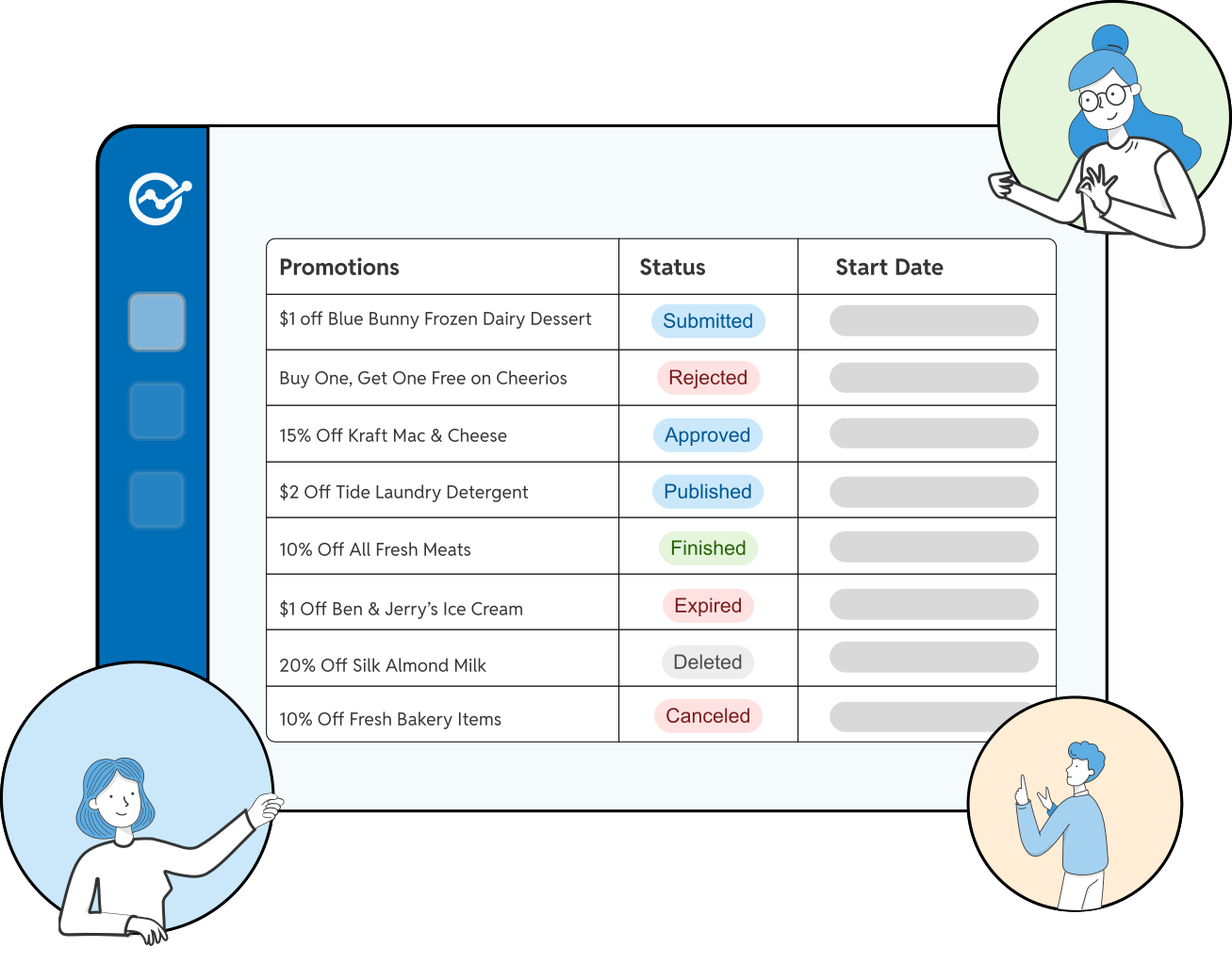
A strong tool brings all promotional activities together in one platform, giving teams a single source of truth. This helps reduce confusion and keep strategies aligned.
- Quick dashboards for overviews of active promotions
- Easy tracking of campaigns, events, and offers
Some platforms take this a step further, and PromoAI is one of them. It centralizes every promotion detail: versions, statuses, timelines, and supporting information, so teams always know where things stand. By working from a single, well-structured space, retailers can track activities more easily, stay aligned, and move through planning with greater clarity and confidence.
Intelligent workflows
Automated workflows streamline planning, reduce repetitive tasks, and speed up approvals. Integration with existing systems ensures smooth execution.
- Version control to track changes and iterations
- Smart approval routing to keep processes moving
Collaboration across teams
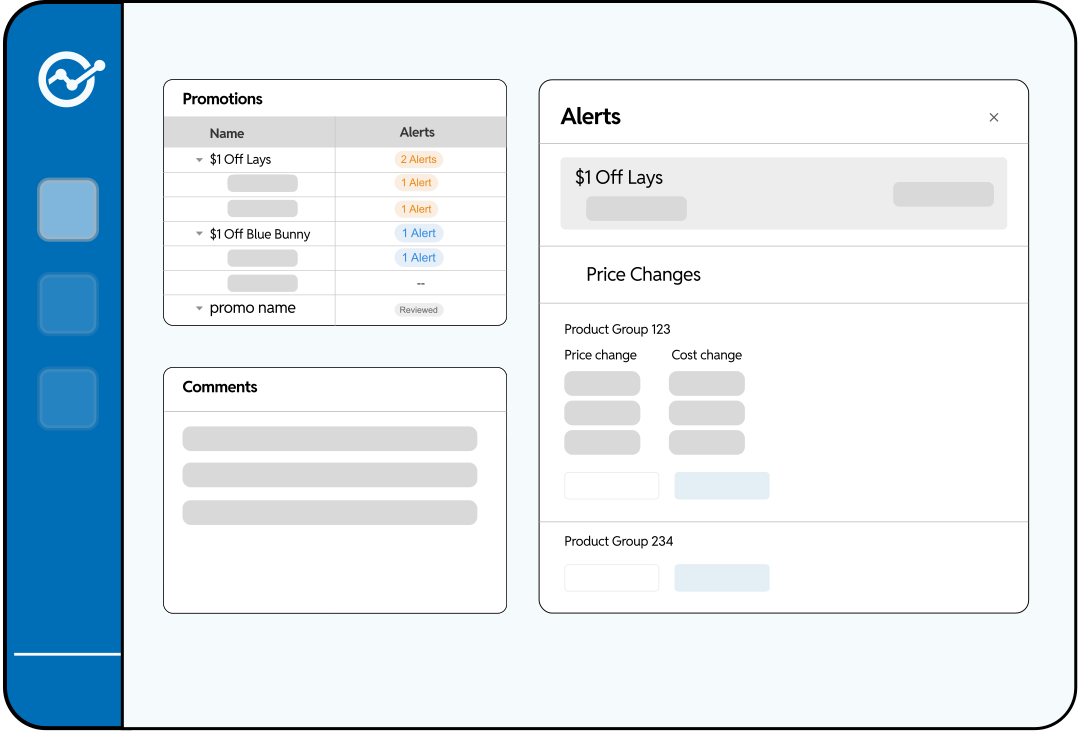
Effective tools support seamless communication across merchandising, marketing, and operations. Shared workflows and clear roles reduce silos.
- Comment threads or annotations for real-time feedback
- Coordinated approvals for aligned execution
With PromoAI, each department can enter their promotion details, leave comments for other teams, and invite members to collaborate. Our tool also sends alerts for any changes, keeping everyone up-to-date and aligned at all times.
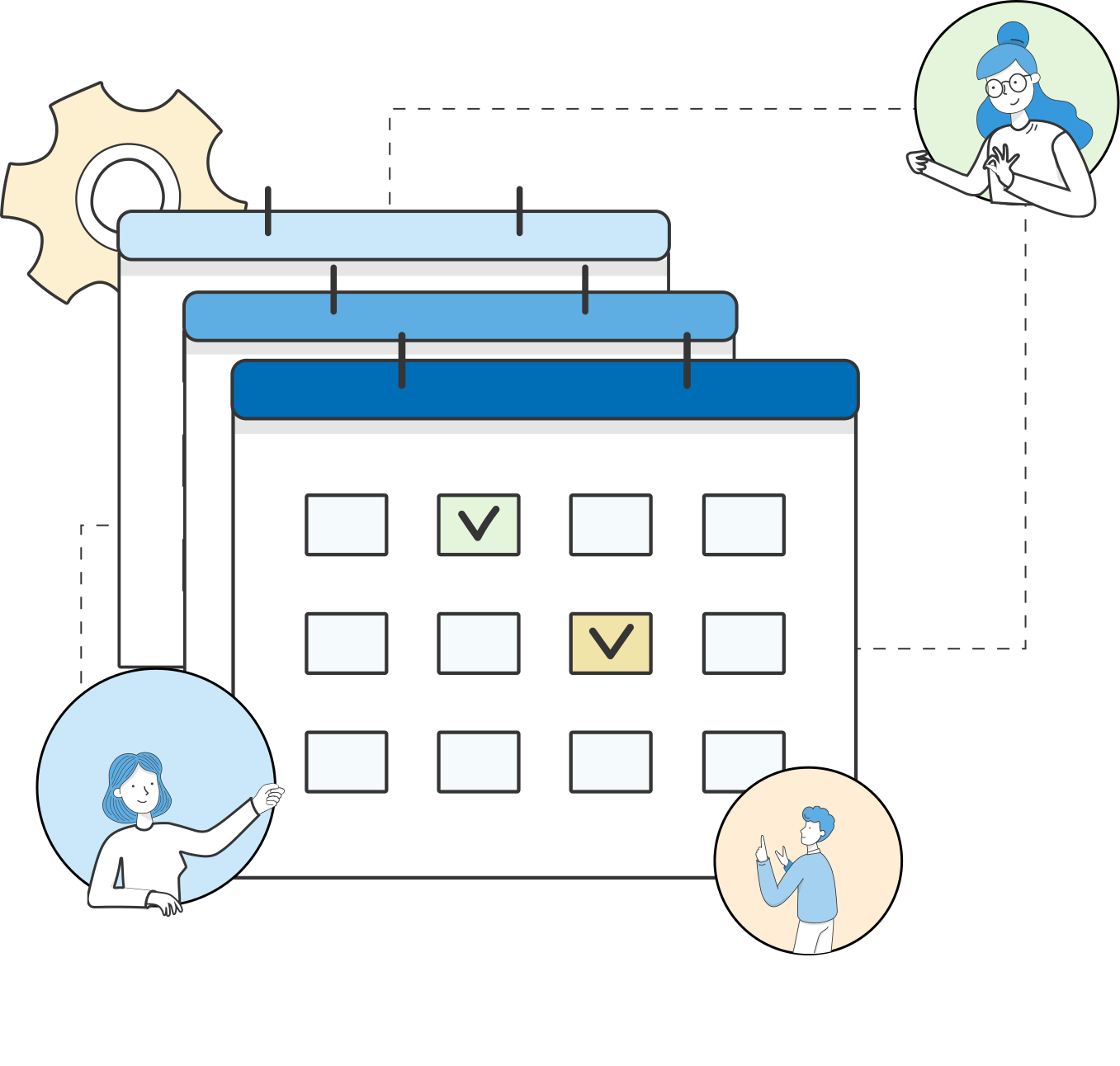
Dynamic promotional calendar
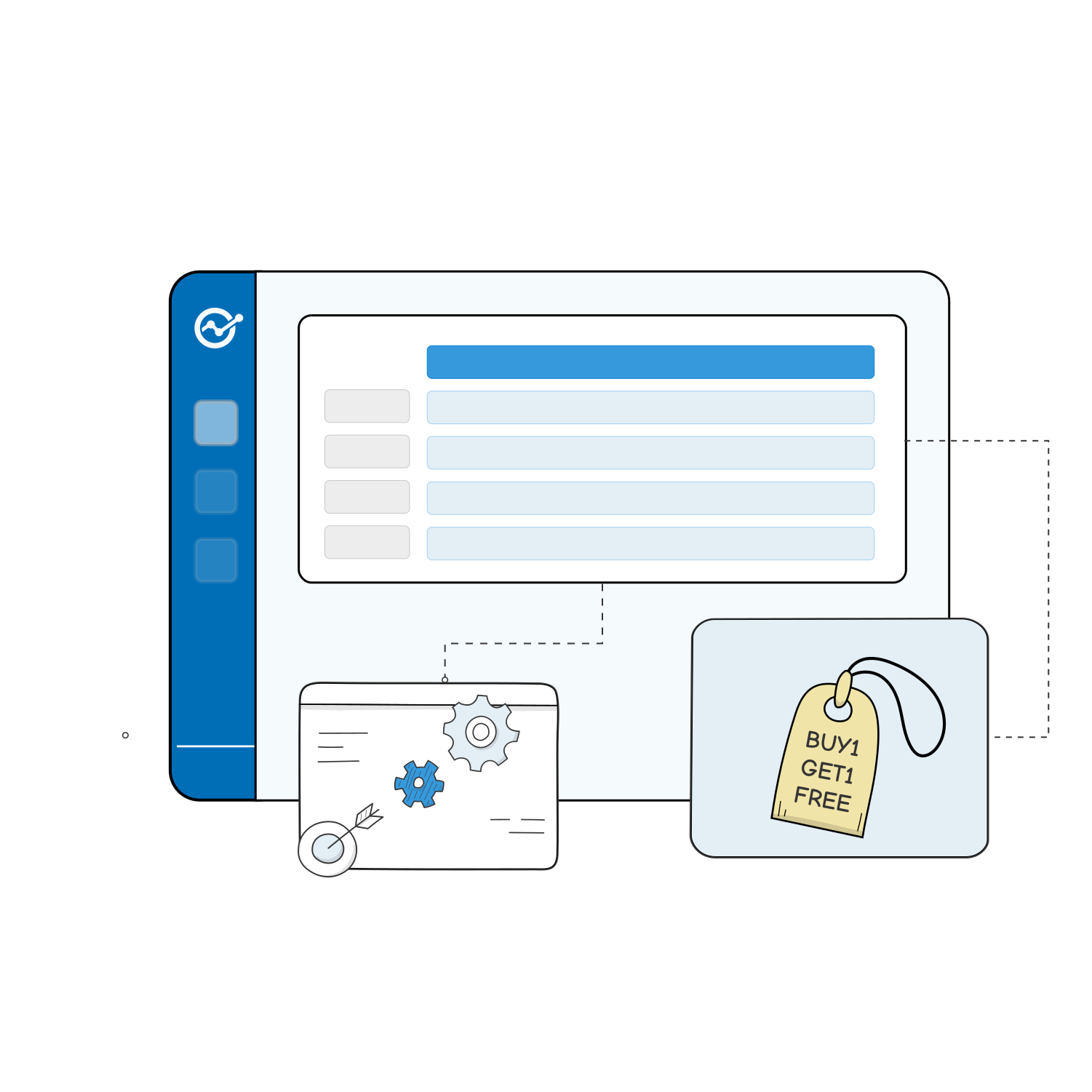
A visual, real-time calendar helps teams see all promotions and events at a glance, avoiding overlaps and optimizing timing.
- Clearly labeled categories for different promotion types
- Easy identification of conflicts or gaps
- Supports cross-team alignment with a shared view of upcoming promotions
PromoAI provides a dynamic, real-time view of all events and their status, including key retail activities, so Marketing teams can easily incorporate them into promotion planning, avoid conflicts, and make more informed decisions.
Trade fund & budget management
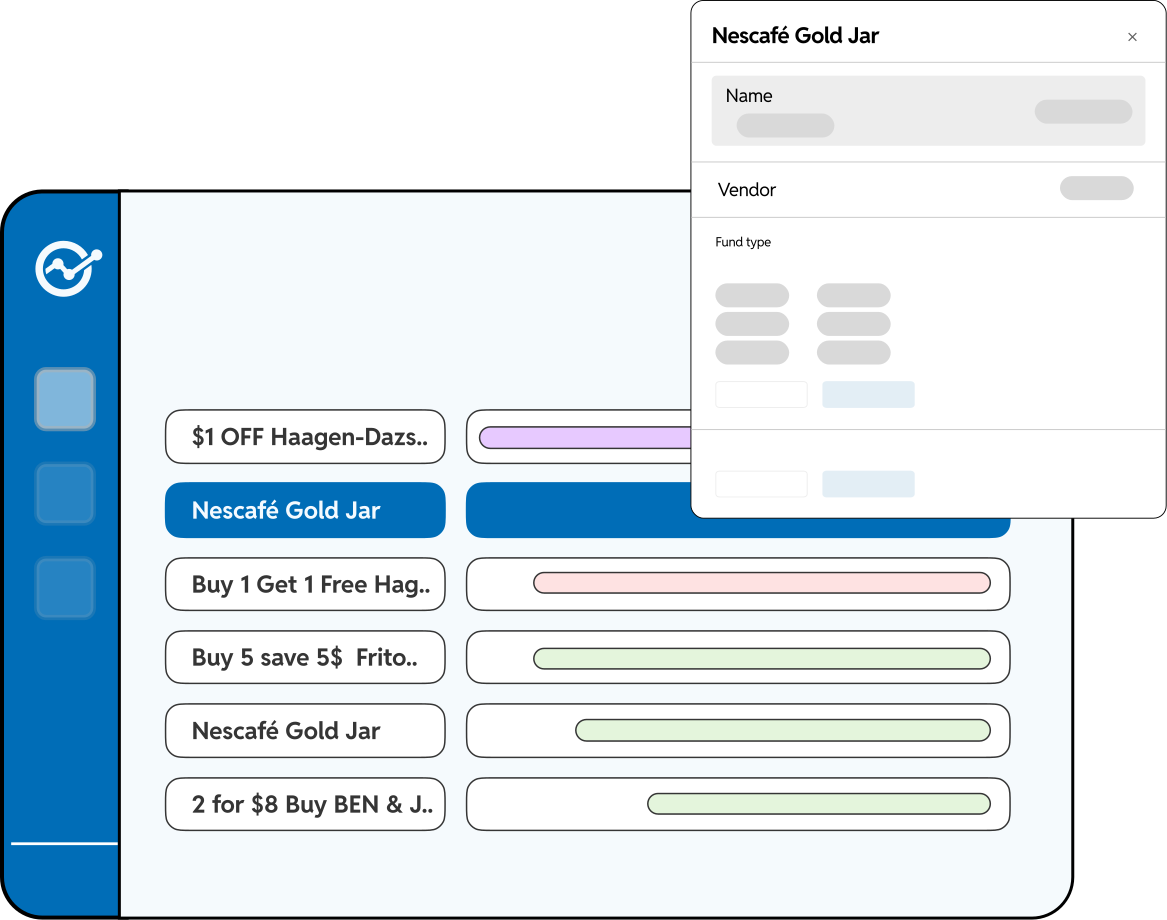
Tools that integrate vendor funding and trade budgets let teams track allocations, monitor ROI, and align spend with priorities.
- Alerts for approaching budget limits or fund expirations
- Visibility into promotional investments across initiatives
- Controls to prevent overspend and keep funding aligned with approved budgets
With Cognira’s promotion planning solution, vendors can submit complete offer details—funding, terms, quantities, and supporting info—so merchandising teams get full visibility to evaluate and approve with confidence. Vendors and merchants can collaborate directly through the vendor portal, track status updates in real time, and use the calendar view to clearly see funding windows and upcoming deal timelines.
Automated alerts & notifications
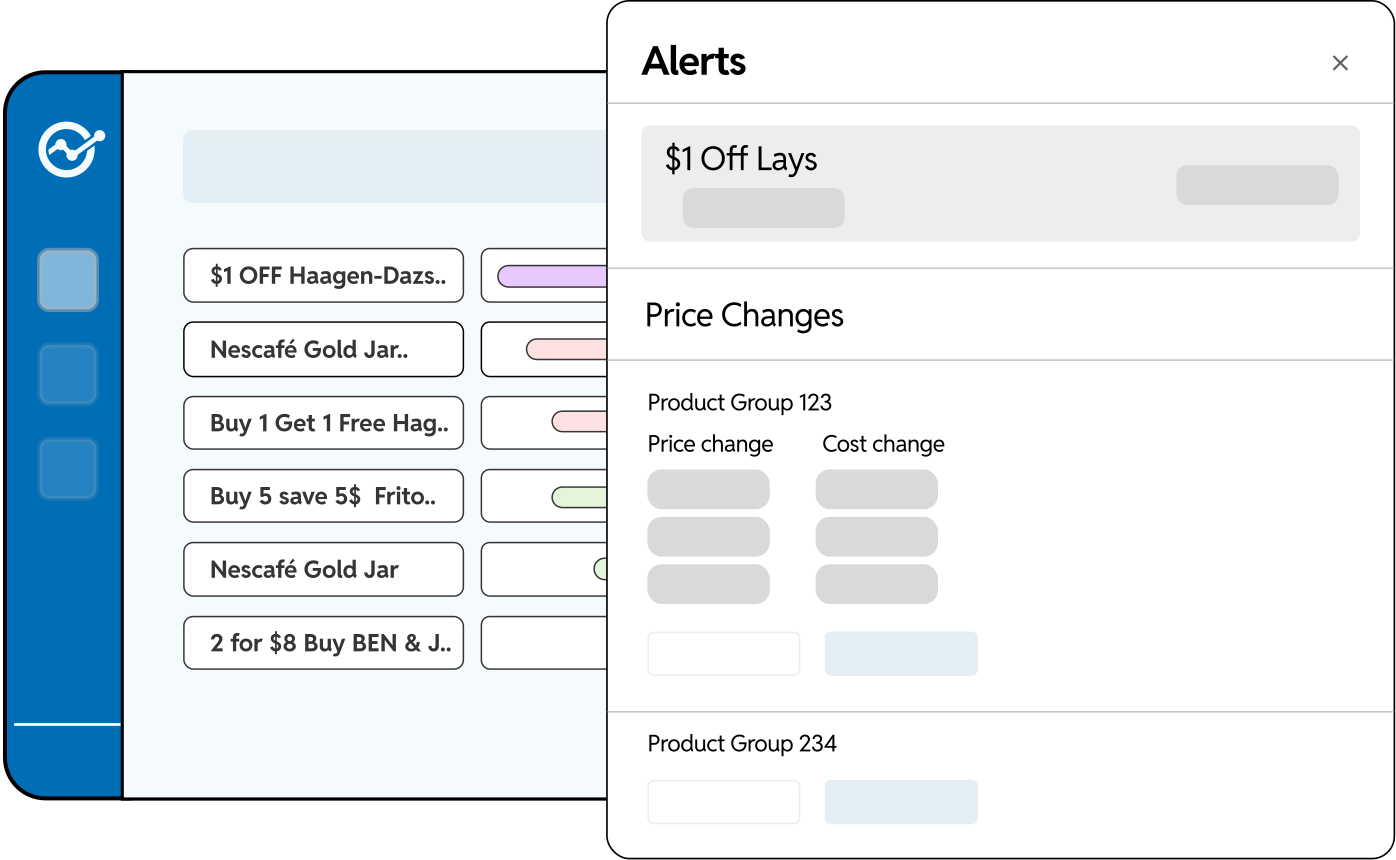
Timely reminders keep teams on track, enforce compliance, and prevent missed deadlines.
- Custom notifications for approvals, deadlines, or status changes
- Reduced bottlenecks through automated workflow triggers
Alerts and notifications are key to staying on top of promotions, and PromoAI makes this effortless. The platform sends real-time updates for any changes, ensuring teams have full visibility, maintain accuracy, and can respond quickly to keep promotions on track.
Single, unified platform
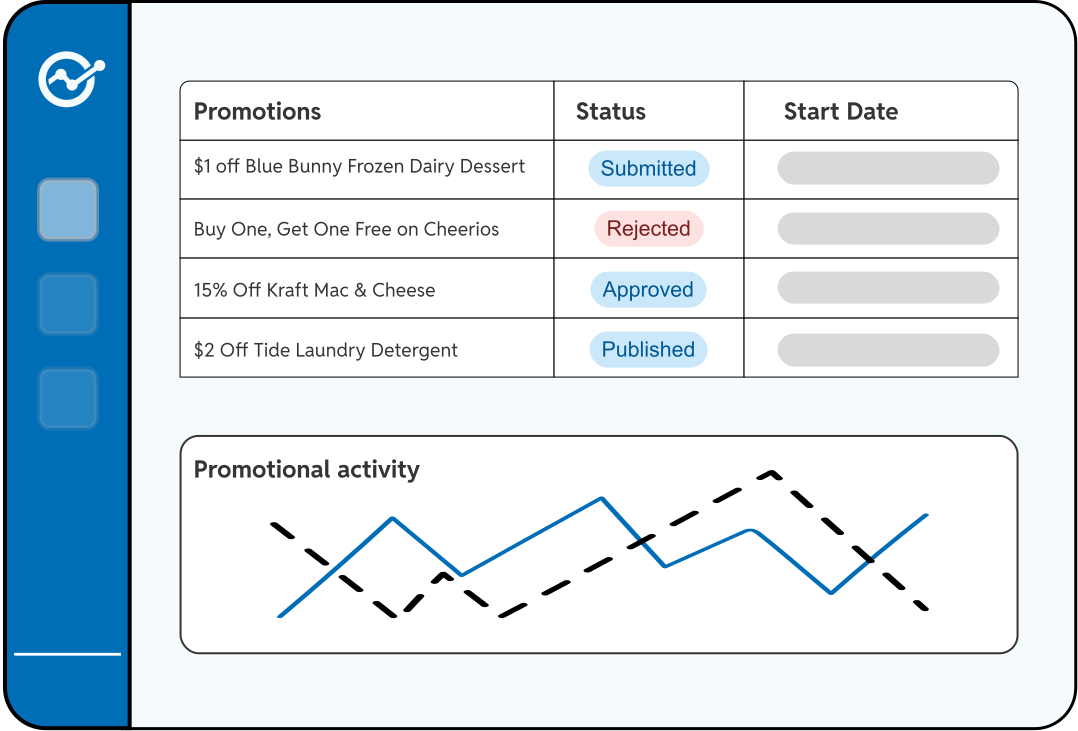
The best tools consolidate all activities, processes, and data in one environment, enabling efficient planning and accurate measurement.
- Integrated reporting to track results and identify trends
- One place for planning, monitoring, and evaluating promotions
PromoAI brings this idea to life by pulling every step of the promotion workflow into one unified space. It centralizes planning, performance insights, and historical data—complete with a timeline graph that shows how promotions evolve over time. Teams can quickly review promotion versions, monitor status updates, and compare results, all without jumping between tools.
Conclusion
Modern retail promotion planning is no longer just about discounts. It’s a strategic, data-driven process combining customer insights, analytics, and careful execution. By designing a targeted promotional calendar, retailers can meet customer expectations, drive profitable growth, and ensure long-term success.
Ready to learn more about PromoAI?
Our team of experts are happy to discuss your business’s needs and show how PromoAI can help you achieve your goals.