What is promotion effectiveness?
Promotion effectiveness is the discipline of evaluating a promotion by its true business impact, incremental sales, incremental profit, and long-term customer behavior, rather than by surface-level revenue.
It’s easy to confuse promotion success with promotion effectiveness. A promotion can generate a strong sales spike and still be a financial loss once trade funding, cannibalization, and margin erosion are factored in. Retailers often assume promotion success is simply about increasing sales, but true promotion effectiveness is much more nuanced.
A few common misconceptions get in the way:
- “Higher volume means the promotion worked.” Volume can rise while profit falls, especially when a promotion mostly shifts demand from full-price periods rather than creating new demand.
- “If shoppers redeemed it, it was a good offer.” Redemption tells you the mechanic worked, not whether it was worth funding.
- “Last year’s lift will repeat this year.” Lift is highly sensitive to competitor activity, weather, inventory position, and category dynamics, it rarely repeats cleanly.
The difference between promotion success and promotion effectiveness comes down to one question: did this promotion make the business better off than not running it at all? That’s the bar effectiveness measurement is built to answer.
Retail margins have rarely been under more pressure. Driven primarily by price increases rather than volume gains, grocery sales growth shows flat or declining unit volumes even as revenue rises. This serves as a clear sign that consumers are buying fewer products while paying more, all while closely monitoring every available discount.
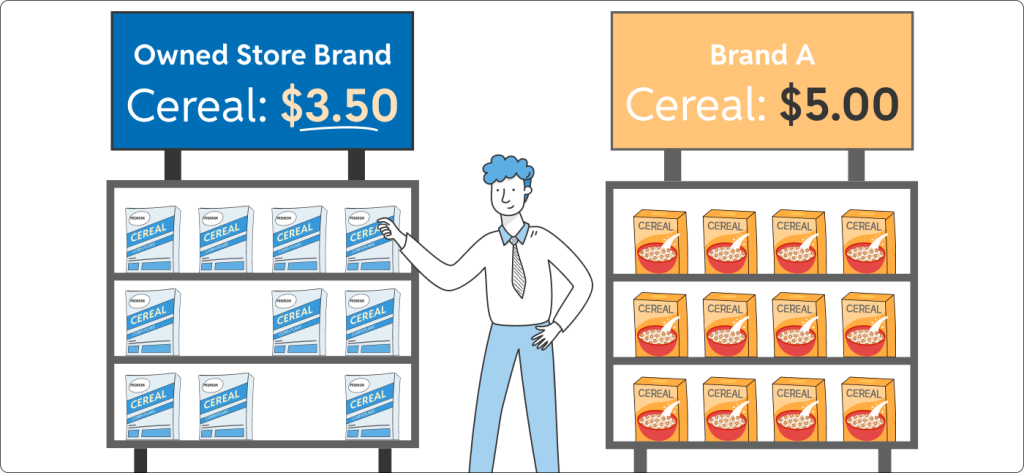
Private labels are accelerating that shift. In 2024, the global private label market reached a valuation of $915.1 billion, and it is projected to expand to $1.62 trillion by 2034. This growth demonstrates robust consumer trust and increasing retailer investment in private label brands. At the same time, inflation-weary shoppers are shopping more deliberately: comparing prices, shrinking baskets, and leaning harder into promotions and private brands to manage spend. That behavior shift is another reason promotion effectiveness can no longer be treated as an afterthought, every promotional dollar is now competing against a shopper who’s activelylooking for the better deal.
Taking into consideration volatile supply chains, omnichannel complexities, and intense competitive pricing, promotions are no longer a straightforward marketing tool. Instead, they have become one of the riskiest capital allocations in retail. Retailers who can’t measure promotion effectiveness accurately are, in effect, flying blind on one of their biggest expense lines.
In our work with retailers, we’ve found that many promotions generate impressive revenue while quietly eroding profitability, and the gap between the two only shows up when someone takes the time to measure promotion effectiveness properly.
How to measure promotion effectiveness
Measuring promotion effectiveness requires more than a top-line sales report. These are the KPIs that separate a truly effective promotion from one that just looks busy on a dashboard.
|
KPI |
Definition |
|
Incremental sales |
The sales that wouldn’t have happened without the promotion, calculated as total sales minus the projected baseline. This is the foundation every other metric builds on. |
|
Promotional ROI |
Incremental profit divided by promotion spend. A result above 1.0 means the promotion paid for itself; below 1.0 means the business lost money funding it, even if sales looked strong. |
|
Incremental profit |
Incremental sales minus the full cost of the promotion, including trade funding, discount depth, and any margin given up on units that would have sold anyway at full price. |
|
Promotional ROI |
Incremental profit divided by promotion spend. A result above 1.0 means the promotion paid for itself; below 1.0 means the business lost money funding it, even if sales looked strong. |
|
Gross margin |
Margin percentage during the promotion versus normal periods. A promotion can drive volume and still compress margin so severely that the category ends up worse off. |
|
Unit lift |
The percentage increase in units sold versus baseline. NielsenIQ generally considers a promotion effective when it produces at least 20 to 30 percent lift, below that threshold, the discount rarely justifies itself. |
|
Basket size |
Whether the promoted item pulled in a larger overall basket or simply substituted for something the shopper was already going to buy. |
|
Customer traffic |
Whether the promotion drove new store or site visits, or just redirected existing traffic toward a discounted item. |
|
Redemption rate |
The share of eligible shoppers who actually used the offer. High redemption without incremental lift is a red flag that the promotion mostly rewarded existing buyers. |
|
Vendor funding performance |
Whether co-op or trade dollars from a vendor were fully utilized and tied to measurable performance, rather than spent reflexively. |
|
Sell-through rate |
How quickly promoted inventory actually cleared, which matters as much for markdown avoidance as for sales velocity. |
|
Inventory impact |
Stockouts, overstock, and the downstream carrying costs a promotion creates, positive or negative. |
The biggest factors that influence promotion effectiveness
No single variable determines whether a promotion works. Promotion effectiveness is the product of several factors interacting at once, which is exactly why isolated, spreadsheet-based analysis tends to miss the real story.
- Pricing strategy and discount depth set the ceiling for how much lift is even possible, and how much margin is sacrificed to get it.
- Promotion timing and seasonality determine whether a discount amplifies natural demand or cannibalizes a period when shoppers would have bought anyway.
- Weather can make or break categories like produce, beverages, and seasonal goods regardless of how well the promotion was planned.
- Product availability and inventory constraints cap incremental sales no matter how strong demand is, a promoted item that’s out of stock generates nothing but frustration.
- Store execution: whether displays, signage, and shelf pricing are actually in place, routinely explains gaps between planned and actual lift.
- Vendor funding shapes what depth of discount is even financially viable before margin turns negative.
- Competitor promotions running in the same window can blunt or amplify a retailer’s own offer.
- Customer behavior: including stockpiling and brand-switching, determines how much of the lift is genuinely incremental versus borrowed from future periods.
- Assortment and channel mix affect whether a promotion cannibalizes adjacent SKUs or channels rather than growing the category.
Promotion effectiveness requires balancing customer demand, inventory availability, vendor funding, and margin performance simultaneously. Treating any one of these in isolation is how retailers end up with a promotion that looks good on one metric and fails on the ones that matter most.
Common reasons promotions fail
Most underperforming promotions fail for predictable, recurring reasons:
- Discounting too aggressively to hit a volume target, without checking whether the incremental margin justifies the depth.
- Running promotions without demand forecasting, so lift estimates are guesses dressed up as plans.
- Poor inventory planning: leading to stockouts during the promotion window or dead stock afterward.
- Ignoring cannibalization: where a “successful” promoted SKU is simply stealing sales from a full-margin item in the same basket.
- Weak vendor collaboration: leaving trade funding negotiated once a year and never revisited against actual performance.
- Lack of post-promotion analysis: so the same mistakes repeat every cycle.
- Measuring revenue instead of profitability: which rewards the wrong promotions and starves the ones that actually work.
- Siloed planning teams: where merchandising, pricing, and supply chain each optimize their own piece without a shared view of the whole promotion.
- Manual spreadsheets: which can’t realistically model interacting variables like timing, depth, inventory, and competitor activity at scale.
- Inaccurate forecasting, which NielsenIQ has tied to roughly 38 percent of trade promotion spend being wasted on flawed baseline assumptions alone.
How AI improves promotion effectiveness
This is where promotion effectiveness shifts from a backward-looking report card to a forward-looking capability.
AI helps retailers predict promotional outcomes before a single dollar is committed, using historical performance, current inventory position, and market conditions to model expected lift and margin impact ahead of launch. It forecasts demand more accurately, replacing static, history-only baselines with models that account for promotional cannibalization, seasonality, and competitive activity.
AI also helps retailers optimize promotional calendars, spacing and sequencing offers so promotions reinforce category performance instead of competing against each other. It supports better pricing decisions by simulating how different discount depths affect both volume and margin before a price is set. Retailers can simulate promotional scenarios, testing multiple what-if combinations of timing, depth, and mechanic, in the time it used to take to build a single spreadsheet model. That kind of speed is what turns promotion effectiveness from a quarterly review into a live, ongoing practice.
Day to day, AI reduces manual planning work, freeing merchandising and pricing teams to focus on strategy instead of data assembly. It detects promotion risks before launch, flagging combinations likely to cannibalize adjacent SKUs or exceed inventory capacity. It optimizes vendor funding by tying trade dollars to predicted performance rather than historical habit. And critically, it enables retailers to continuously learn from historical promotions, feeding every campaign’s actual results back into the model so forecasts get sharper over time instead of staying static.
The most successful retailers continuously learn from every promotion instead of evaluating campaigns in isolation, and that continuous feedback loop is exactly what makes promotion effectiveness a compounding advantage rather than a one-time fix. AI is built to support this level of scale that manual processes simply cannot match sustainably.
Promotion effectiveness across the promotion lifecycle
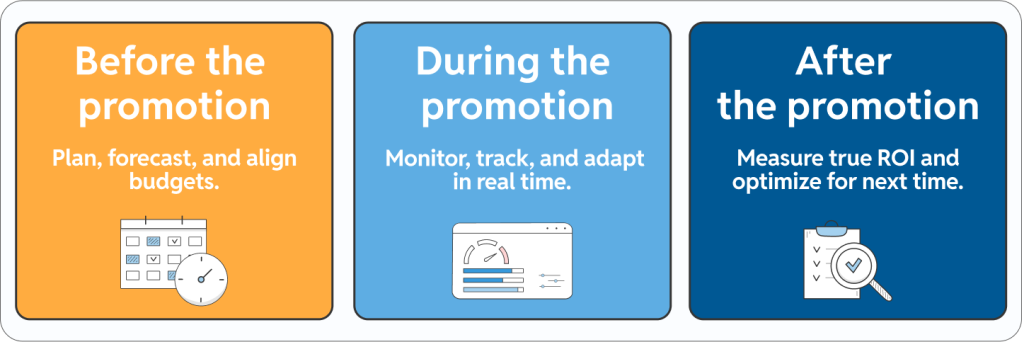
Promotion effectiveness isn’t a single measurement taken after the fact, it’s a discipline that spans the entire lifecycle of a promotion.
Before the promotion
This stage sets the ceiling for everything that follows. It includes planning the promotional calendar, forecasting expected demand, modeling multiple scenarios before committing budget, allocating funds across categories and vendors, and collaborating with vendors on funding and timing.
During the promotion
Once live, promotion effectiveness depends on active monitoring, tracking inventory in near real time, confirming execution at store or site level, and making adjustments when early signals show a promotion is under- or over-performing versus plan.
After the promotion
This is where most retailers stop, but it’s only the beginning of the value. Post-promotion analysis should cover full performance measurement, true incremental lift (not just raw sales), final ROI, documented lessons learned, and a clear plan for how those lessons change the next promotion.
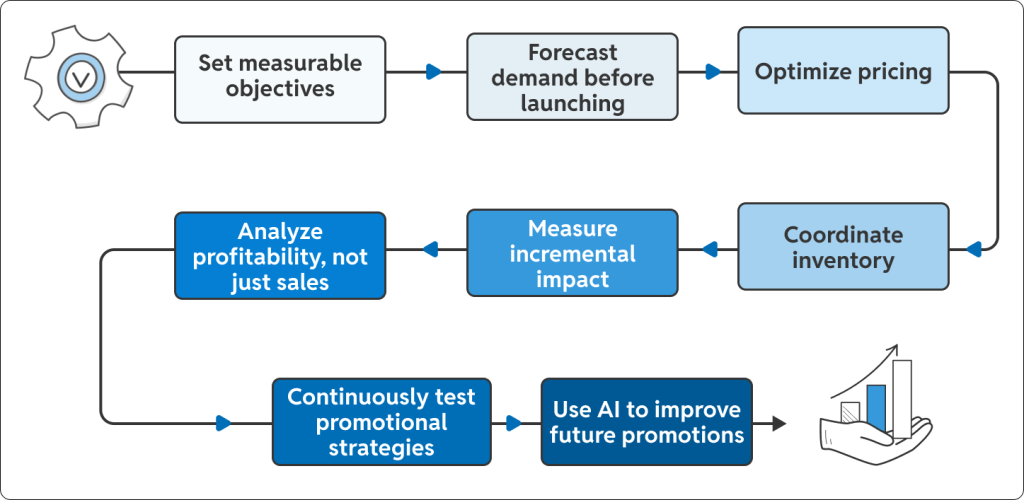
Best practices for improving promotion effectiveness
- Set measurable objectives for every promotion before it launches. Traffic, basket size, incremental profit, or clearance, not “increase sales.”
- Forecast demand before launching: using models that account for promotional effects, not just historical averages.
- Optimize pricing by testing discount depth against margin impact rather than defaulting to round numbers.
- Coordinate inventory across merchandising and supply chain so promoted items are actually in stock when demand hits.
- Measure incremental impact: not gross sales, as the primary success metric.
- Analyze profitability, not just sales for every promotion, every time.
- Continuously test promotional strategies: treating each campaign as a data point rather than a one-off event.
- Use AI to improve future promotions: closing the loop between what was planned, what happened, and what should change next time.
Choosing a promotion effectiveness platform
Not all promotion software is built to answer the same questions. When evaluating a platform, look for:
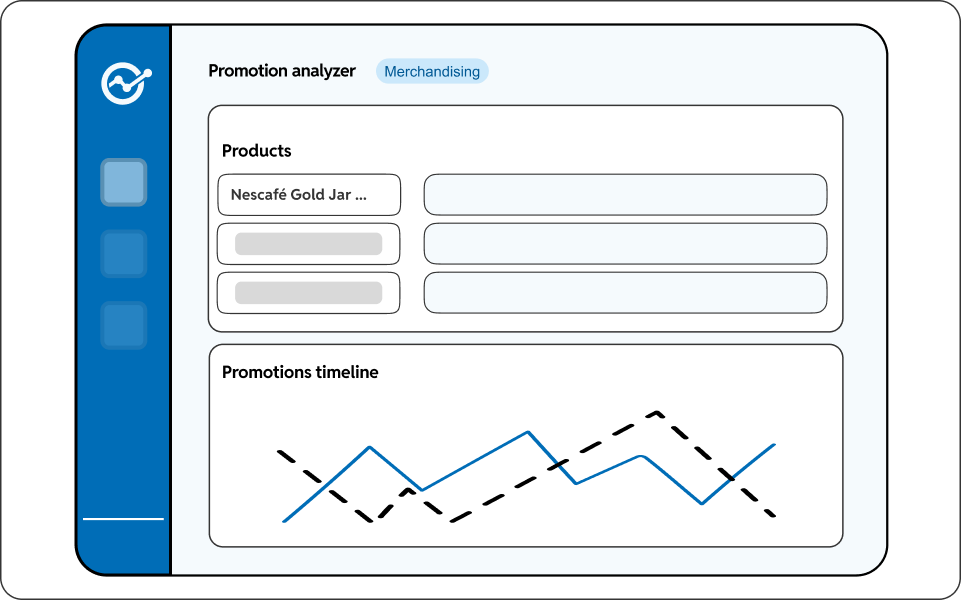
Promotion analytics
The platform should decompose every promotion into baseline, lift, and true incrementality, not just report gross totals. If a tool can only tell you total sales during a promotion window, it’s giving you a lift number, not an effectiveness number. Look for analytics that separate demand the promotion actually created from demand it simply pulled forward or borrowed from another SKU.
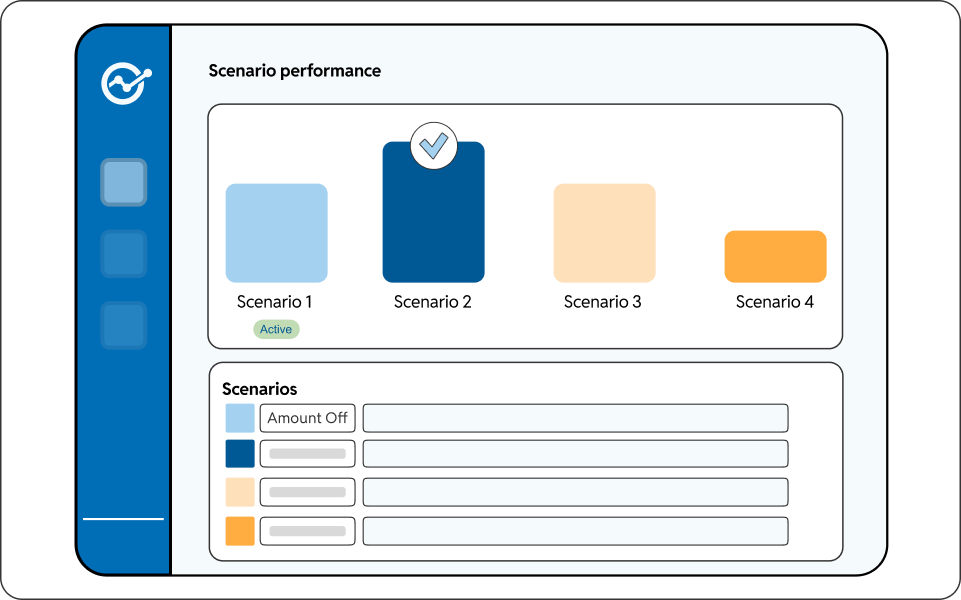
Scenario planning
Teams should be able to model multiple what-if combinations, different discount depths, timing windows, or funding splits, before a dollar is committed. This turns promotion planning from a single best guess into a comparison of several modeled outcomes, so the final call is based on projected ROI rather than habit or hierarchy. This transition serves as a significant driver for promotion effectiveness, ensuring that the promotions reaching the store shelves are those with the highest potential for profitability, rather than simply the ones that were simplest to organize.
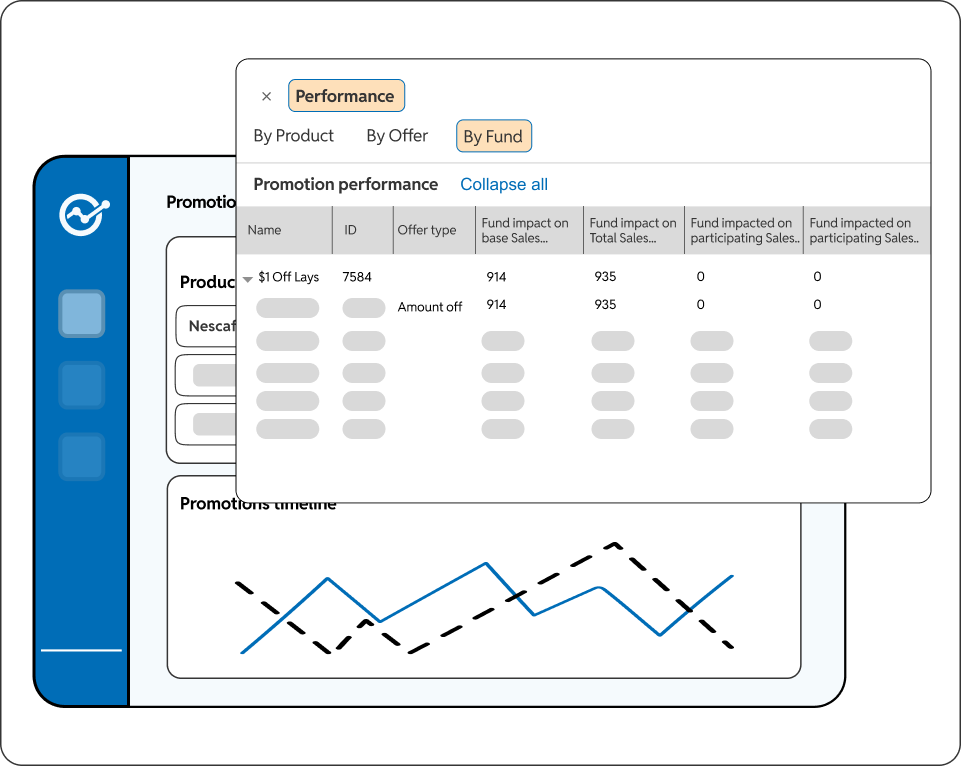
Vendor funding visibility
Trade dollars need to be tied to measured performance, not negotiated once a year and left untouched. The platform should show which vendor-funded promotions are earning their keep and which funding commitments are going underutilized or unreconciled.
Performance tracking
Waiting until a promotion is over to find out how it went is waiting too long. Dashboards that update continuously, rather than on a weekly or monthly cadence, give teams a chance to catch a promotion drifting off plan while there’s still time to do something about it, which is a very different posture than reviewing results after the fact and simply taking notes for next time.
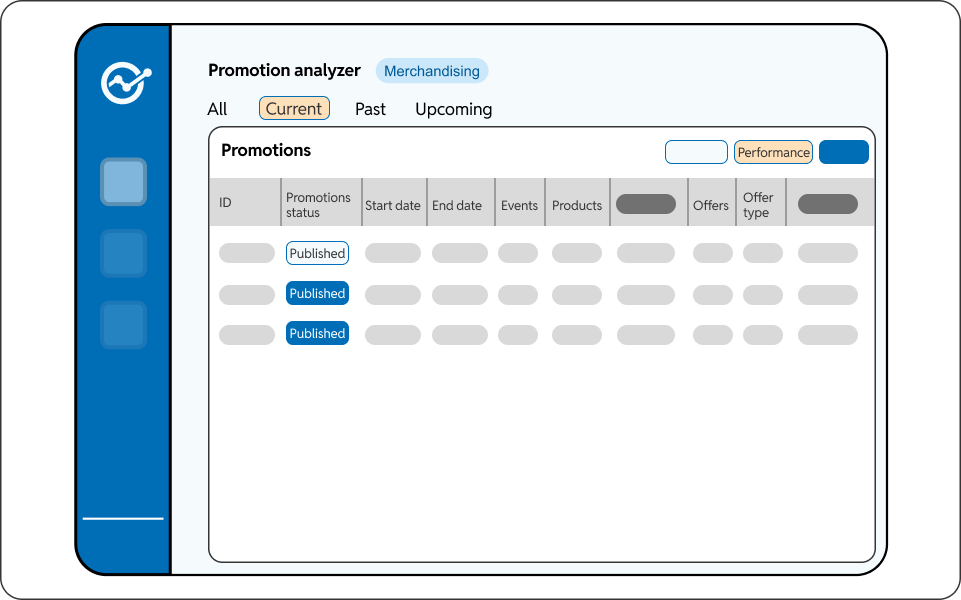
Forecasts vs actual results
Perhaps the most telling test of a platform is whether it makes it easy to line up what was predicted against what actually happened. That side-by-side view is where forecasting gets better, every gap between projection and reality is information a team can use to tighten the next forecast, refine assumptions, and make the following promotion a little smarter than the one before it.
This is the gap Cognira was built to close. Rather than reporting what already happened, PromoAI connects planning and measurement into a single system to keep baselines accurate as conditions change.
Promotion effectiveness is an ongoing capability, not a one-time analysis
Rather than a post-campaign report, promotion effectiveness is a permanent capability that retailers leverage for every subsequent initiative. The industry leaders today aren’t simply launching more promotions; instead, they have established the rigor to reliably identify viable offers and continuously refine future campaigns based on past insights.
Cognira facilitates this exact transformation, shifting retailers away from reactive metrics toward ongoing, AI-powered promotional intelligence.
Rather than a post-campaign report, promotion effectiveness is a permanent capability that retailers leverage for every subsequent initiative. The industry leaders today aren’t simply launching more promotions; instead, they have established the rigor to reliably identify viable offers and continuously refine future campaigns based on past insights.
Cognira facilitates this exact transformation, shifting retailers away from reactive metrics toward ongoing, AI-powered promotional intelligence.
FAQs
What is promotion effectiveness?
Promotion effectiveness is the measure of how much true business value a promotion creates, based on incremental sales and incremental profit rather than gross revenue alone. It accounts for cannibalization, trade funding costs, and margin impact to determine whether a promotion actually paid for itself.
How do you measure promotion effectiveness?
Promotion effectiveness is measured using KPIs like incremental sales, incremental profit, promotional ROI, unit lift, and gross margin, typically by comparing actual performance against a modeled baseline of what would have sold without the promotion. The most reliable approach separates true incremental demand from sales that would have happened anyway.
Why is promotion effectiveness important?
Trade spend routinely accounts for 8 to 11 percent of revenue for many retailers and consumer goods companies, yet a large share of that investment underperforms. Without accurate measurement, retailers can’t tell which promotions are genuinely profitable and which are quietly destroying margin.
What KPIs measure promotional success?
Core KPIs include incremental sales, incremental profit, promotional ROI, gross margin, unit lift, basket size, redemption rate, and sell-through rate. Together, these metrics reveal not just whether a promotion moved a product, but whether it was worth running.
How does AI improve promotion effectiveness?
AI improves promotion effectiveness by predicting outcomes before launch, forecasting demand more accurately, simulating multiple promotional scenarios, and continuously learning from past campaigns. This shifts promotion planning from a reactive, historical exercise to a proactive, predictive one.
What is promotional ROI?
Promotional ROI is incremental profit divided by total promotion spend, showing whether a campaign generated more value than it cost to run. A result above 1.0 means the promotion was profitable; below 1.0 means the business lost money funding it.
How can retailers improve promotion effectiveness?
Retailers improve promotion effectiveness by setting measurable objectives, forecasting demand accurately before launch, coordinating inventory with promotional plans, and measuring profitability rather than gross sales after every campaign. Continuously feeding results back into planning is what separates improving retailers from ones that repeat the same mistakes.
What software helps measure promotion effectiveness?
Effective promotion measurement software combines promotion analytics, AI-driven forecasting, scenario planning, and vendor funding visibility in one connected system, rather than relying on disconnected spreadsheets and reports. Platforms like Cognira’s PromoAI are built specifically for the promotion lifecycle, from planning through post-promotion analysis.
Ready to learn more about PromoAI?
Our team of experts are happy to discuss your business’s needs and show how PromoAI can help you achieve your goals.