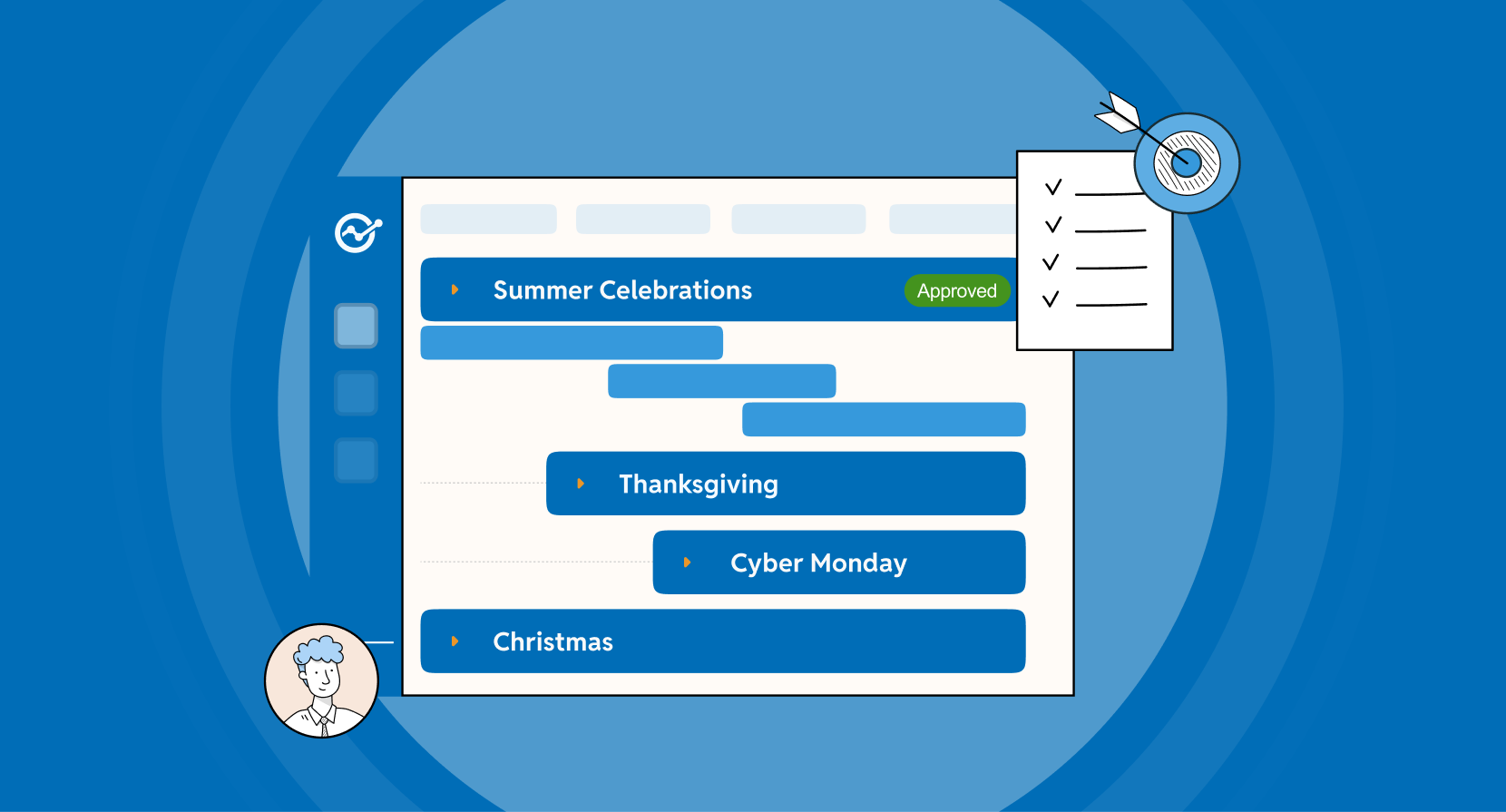
What is a retail promotion management software?
A promotion management software is a centralized platform designed to end the era of fragmented planning. It unifies the entire lifecycle of a promotion into a single digital environment, specifically managing:
- Predictive optimization: Using machine learning to forecast baseline sales, incremental lift, and margin impacts before a discount goes live.
- Collaborative workflows: Centralizing vendor negotiations, co-op funding tracking, and internal marketing approvals.
- Omnichannel synchronization: Ensuring that a promotion seamlessly routes to physical point-of-sale (POS) systems, e-commerce stores, and digital circulars simultaneously without manual duplication.
Ultimately, it shifts retail teams away from reactive, “copy-and-paste” promotional calendars and toward proactive, data-driven margin control.
Predictive optimization

Collaborative workflows
Omnichannel synchronization

Why platform transitions in retail are risky by default
Retail is an industry where timing is revenue. A delayed promotional plan isn’t just an internal inconvenience, it ripples outward into vendor commitments, circular deadlines, store execution, and ultimately customer perception. When a merchandising team has to absorb a technology change while managing live business, the margin for disruption is nearly zero.
This is why platform transitions carry a certain level of anxiety relative to their eventual impact. The fear isn’t about the software itself. It’s about the gap period, the weeks or months where the team is neither fully on the old system nor fully functional on the new one.
That gap has real costs: slower decision cycles, team frustration, and sometimes the quiet abandonment of the platform in favor of familiar manual processes.
The difference between “implemented” and “adopted”
Implementation is a technical milestone, while adoption is a behavioral one, and the two are far from the same thing.
A promotion management software can be fully integrated at the infrastructure level while remaining practically invisible in day-to-day workflows. Teams only use it when required. And over time, the gap between what the tool can do and what teams actually do with it becomes the organization’s permanent ceiling.
True adoption looks different. It means the platform stops being “the new system” and becomes simply how work gets done. Promotion planning doesn’t happen despite the tool, it happens through it. A “natural adoption” doesn’t mean automatic or effortless in the implementation sense. It means the platform stopped creating cognitive overhead, and teams stopped thinking about using it and started just using it.
That transition, from deliberate to natural, is where the ROI on any technology investment actually lives.
What drives adoption: Three factors that actually matter
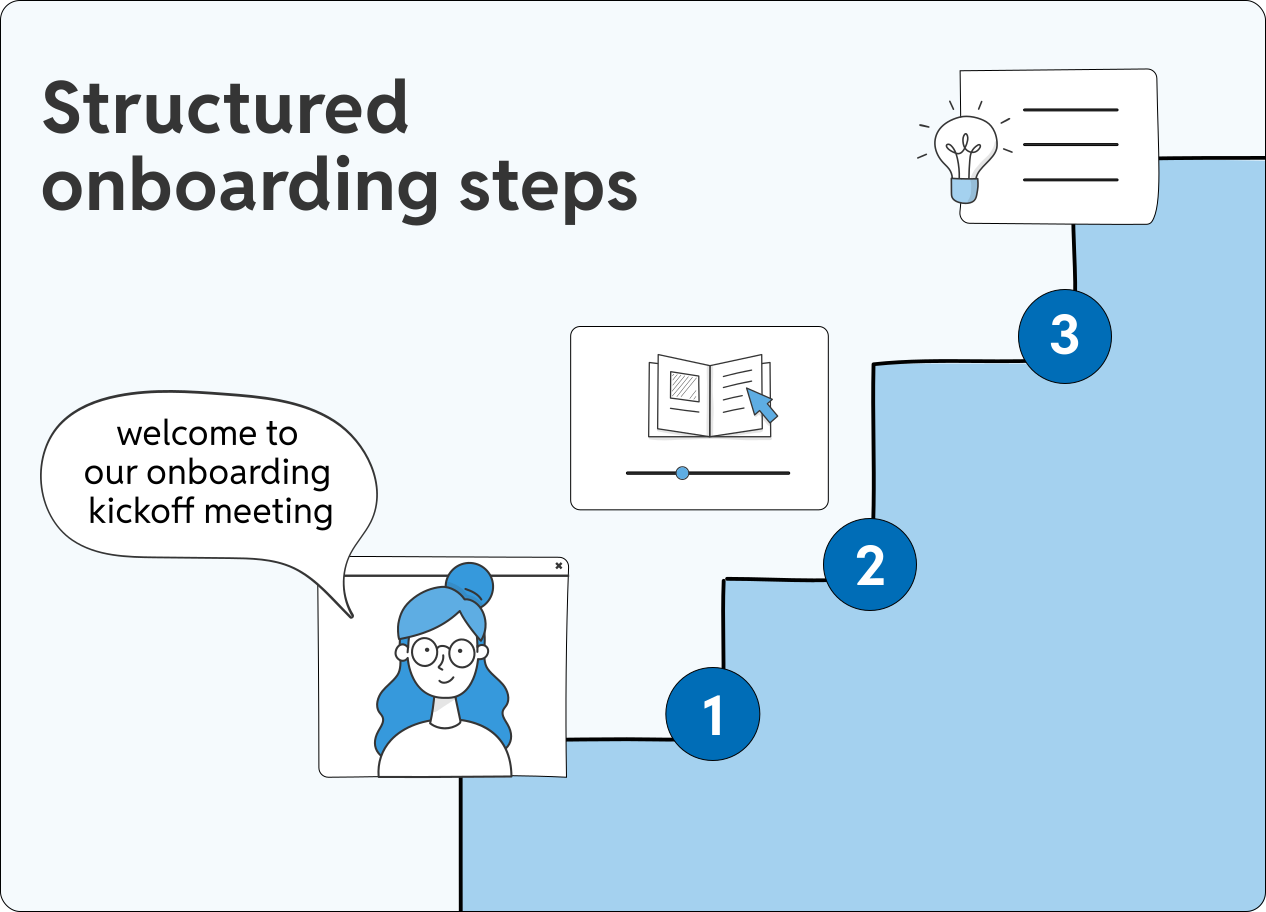
1. Structured onboarding, not generic training
The most common onboarding failure mode in enterprise SaaS is treating the process as a one-time event rather than a structured progression. A kickoff call, a few training modules, and a knowledge base don’t constitute onboarding, they constitute documentation.
Structured onboarding means sequencing the experience in a way that mirrors how teams actually build capability, starting with what’s immediately actionable, layering complexity as confidence grows, and creating checkpoints that verify understanding rather than just delivery.
2. Support that’s available before it’s urgent
A responsive support team matters less in the theoretical sense than in the practical one. Merchandising decisions don’t wait for ticket resolution windows. When a team member hits a question mid-workflow, the quality and speed of the answer determines whether they push through or find a temporary strategy.
Consistently responsive support doesn’t just resolve issues. It removes the hesitation that slows adoption in the first place. When teams know help is available, they’re more willing to use unfamiliar features rather than defaulting to old habits.

3. Intuitiveness that doesn’t require justification
The most durable sign of a well-designed platform is that users stop questioning whether to use it. The interface becomes transparent, not in a technical sense, but in the sense that it doesn’t insert itself between the user and the work.
This is harder to engineer than most features. It requires deep understanding of how merchandising teams actually think and work, not just what they need to input and output. When a platform achieves this, adoption follows almost automatically. The tool fits the mental model rather than forcing the user to adopt a new one.
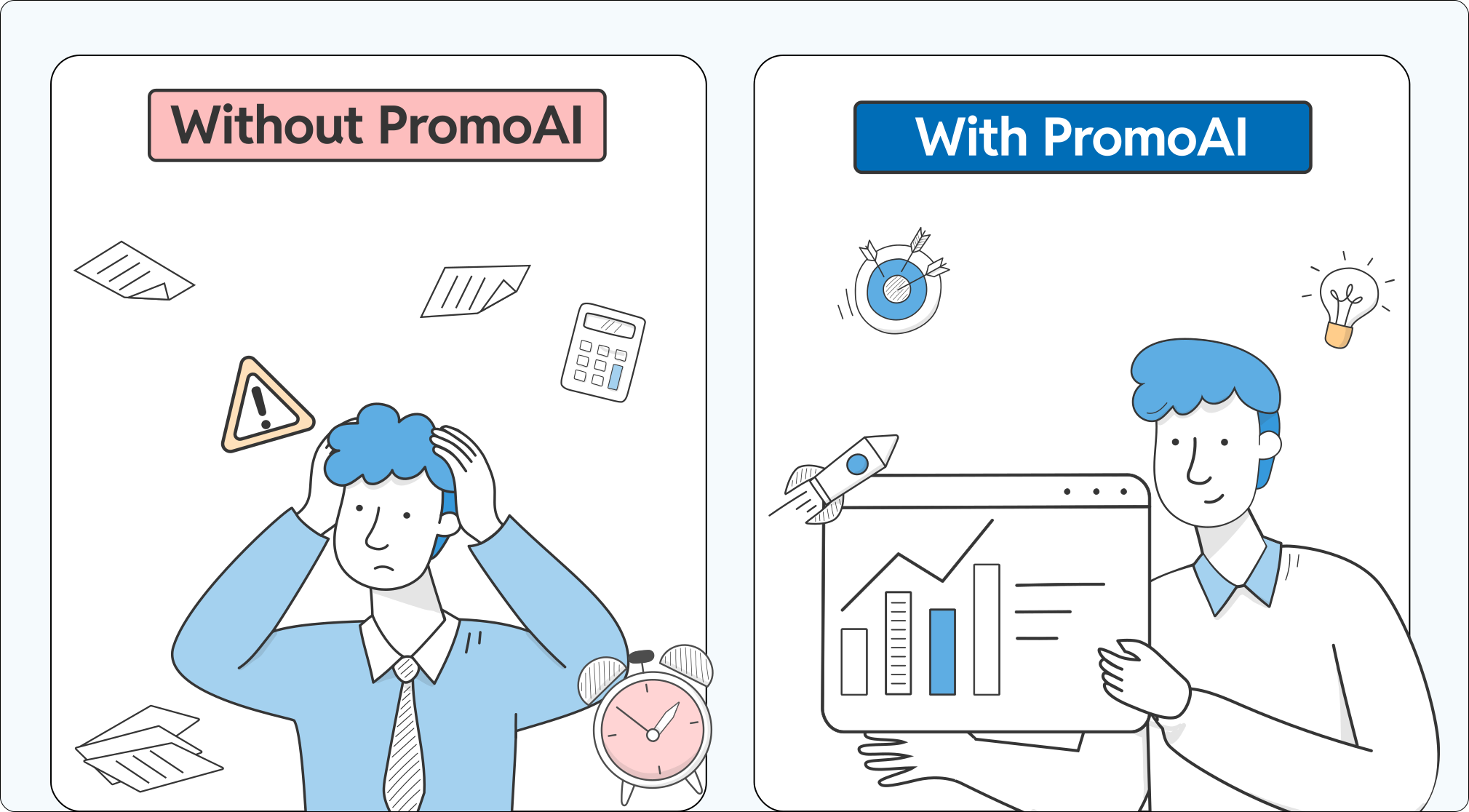
The strategic implication for retail & merchandising leadership
Promotion management software evaluation in retail often focuses on feature sets, integrations, and pricing. These are necessary criteria. But they’re upstream of the question that actually determines value: will your team use this well, consistently, and at scale?
The organizations getting the most out of their promotion technology aren’t necessarily the ones with the most sophisticated tools. They’re the ones where the tool and the team are genuinely aligned, where the platform accelerates the work rather than becoming another layer of it.
That alignment starts at the implementation stage. A smooth, structured transition isn’t a nice-to-have. It’s the mechanism through which the investment becomes real.
Key Takeaways
- Implementation success and adoption success are distinct outcomes.
- The gap between implementation and adoption is where most platform ROI is lost.
- Structured onboarding, responsive support, and intuitive design are the operational drivers of adoption, and should be evaluated as seriously as feature functionality.
- When a platform becomes “natural” to use, it stops being a change management challenge and starts becoming a competitive capability.
FAQs
What is a retail promotion management software?
It is a centralized platform that unifies the entire lifecycle of a promotion into a single digital environment. Instead of relying on fragmented spreadsheets, it replaces reactive “copy-and-paste” planning with proactive margin control by combining three core capabilities:
- Predictive optimization: Uses machine learning to forecast baseline sales, incremental lift, and margin impacts before a discount goes live.
- Collaborative workflows: Centralizes vendor negotiations, co-op funding tracking, and internal marketing approvals in one place.
- Omnichannel synchronization: Automatically routes promotions to physical POS systems, e-commerce stores, and digital circulars simultaneously, eliminating manual duplication.
What are the must-have features to look for in a promo management solution?
While many legacy RFPs emphasize an endless checklist of features, the best solution is ultimately defined by its balance of predictive intelligence and user adoption. At a minimum, a modern platform should offer:
- AI-driven demand forecasting: The ability to simulate promotional scenarios and accurately predict incremental lift versus baseline sales.
- Cross-product elasticity modeling: Automatic flags that warn you when a steep discount will quietly cannibalize a more profitable, adjacent item in the category.
- Unified omnichannel calendar: A single source of truth that aligns vendor funding, marketing, and physical in-store execution.
- Minimal cognitive overhead: An interface intuitive enough that category managers don’t immediately default back to standalone spreadsheets to do their real thinking.
What is the difference between promotion planning and promotion optimization?
It helps to think of planning as operational mechanics and optimization as financial intelligence.
- Promotion planning handles the baseline logistics: scheduling the calendar, routing workflows for approval, and tracking vendor funding commitments.
- Promotion optimization uses machine learning to answer “what if” questions. It simulates various discount depths and timing to protect gross margins and maximize true ROI before a single price is changed at the register.
How do modern platforms solve the "copy-and-paste" promotion trap?
Modern optimization solutions provide post-event analytics that isolate the true net margin. When a platform clearly demonstrates that a historical 30% discount actually eroded total category profitability, merchandising teams gain the data-backed confidence to test healthier alternatives, like bundle offers or targeted loyalty rewards.
Why do so many retail software implementations fail to deliver their promised ROI?
The failure rarely lies in the technical codebase; it lies in the adoption gap. If a new platform requires more manual steps or mental friction than a standard Excel sheet without offering immediate workflow relief, busy teams will quietly abandon it. True ROI is realized only when the tool matches the real-world pace of the merchant.