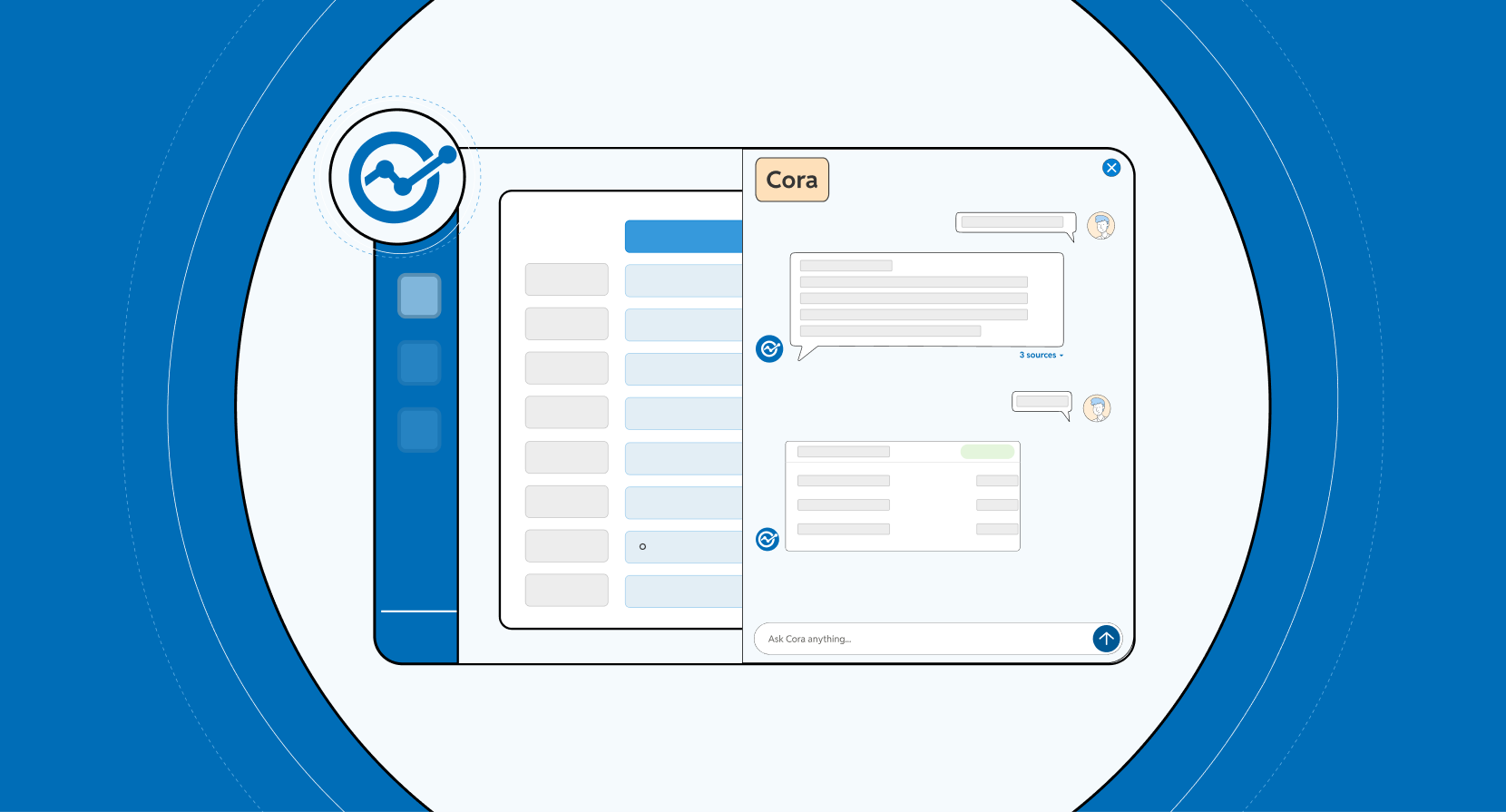
When we introduced Cora, Cognira’s AI agent for PromoAI, we focused on what she does: helping planners understand, navigate, create, explain, and resolve their work throughout the promotion planning process. Those capabilities matter. But they’re also the surface of something far more significant.
Cora doesn’t just add functionality to PromoAI. She expands how planners interact with it, how planners ask questions, explore options, evaluate decisions, and turn ideas into execution. For retail teams managing the complexity of modern promotion planning, that’s not a product update. It’s a shift in how retailers interact with their promotion planning software.
This piece is about that shift: what it means, why it matters, and where it’s headed.
From predefined answers to open questions
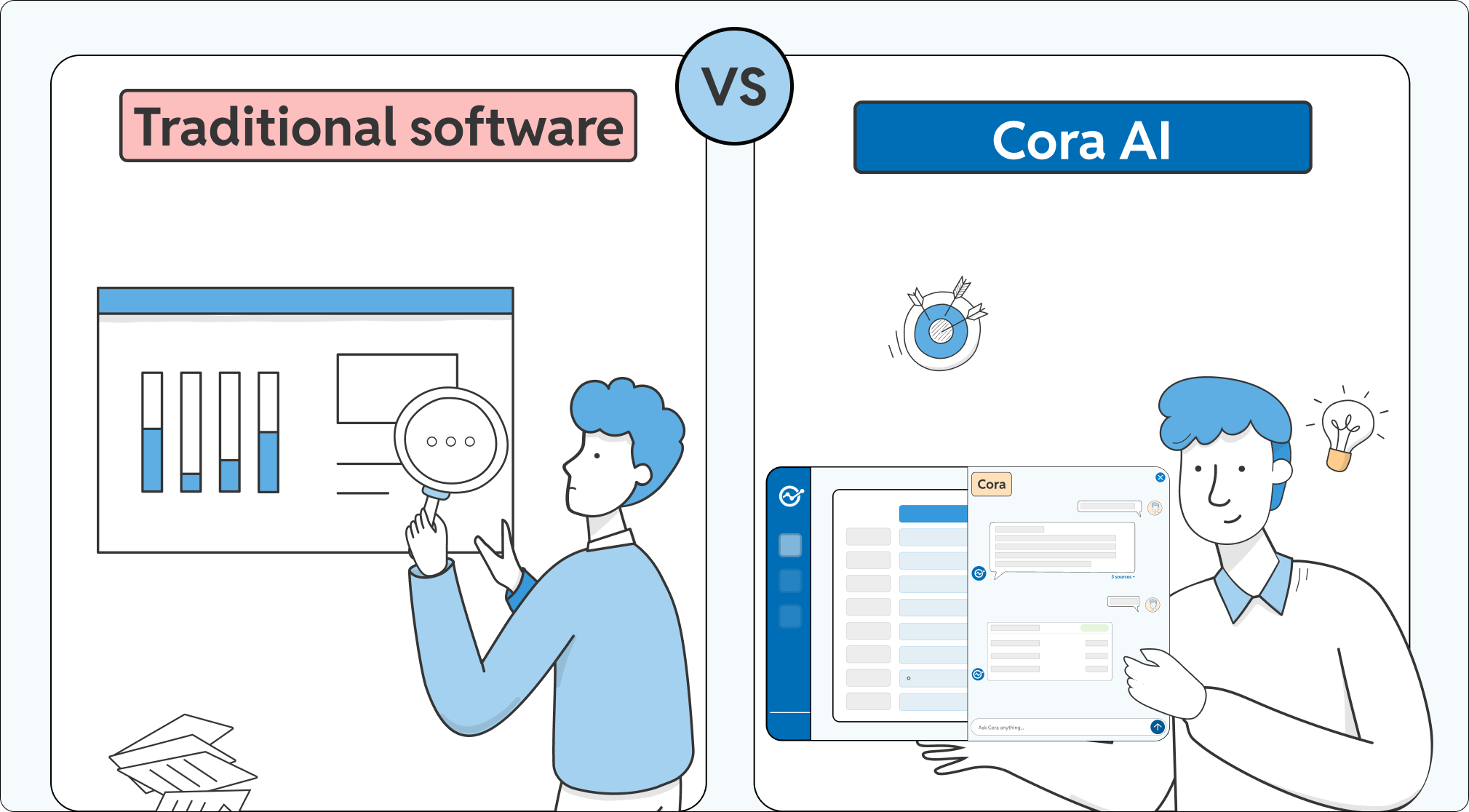
With Cora embedded in PromoAI, promotion planners no longer have to work within the boundaries of what the software was built to surface. They can ask the questions they actually have, in the moment, in plain language, without waiting for a report to be built or a filter to be configured.
Example: Exploratory questions Cora can answer
- “What worked well last Fourth of July?”
- “Which offer types consistently deliver the strongest results?”
- “Compare this event to last year’s.”
- “Summarize promotional performance for frozen foods.”
None of these questions require a new report. None of them need to be pre-configured. Cora handles them naturally, within the context of the work the planner is already doing.
This doesn’t replace dashboards or traditional reporting. Those tools remain essential for monitoring performance at a glance and keeping leadership informed. What Cora adds is the ability to go deeper, to ask follow-up questions, pursue a line of inquiry, and investigate what matters most in the moment, without switching tools or waiting for someone else to pull the data.
The result is a fundamentally more responsive form of retail AI. Planners aren’t constrained by what the software anticipated. They’re empowered by what they actually need to know.
From forecasts to better decisions
Promotion planning has always been about looking forward. Forecasts help planners evaluate promotions before they reach customers, but they also create new opportunities to ask deeper questions.
Example: Deeper forecast exploration with Cora
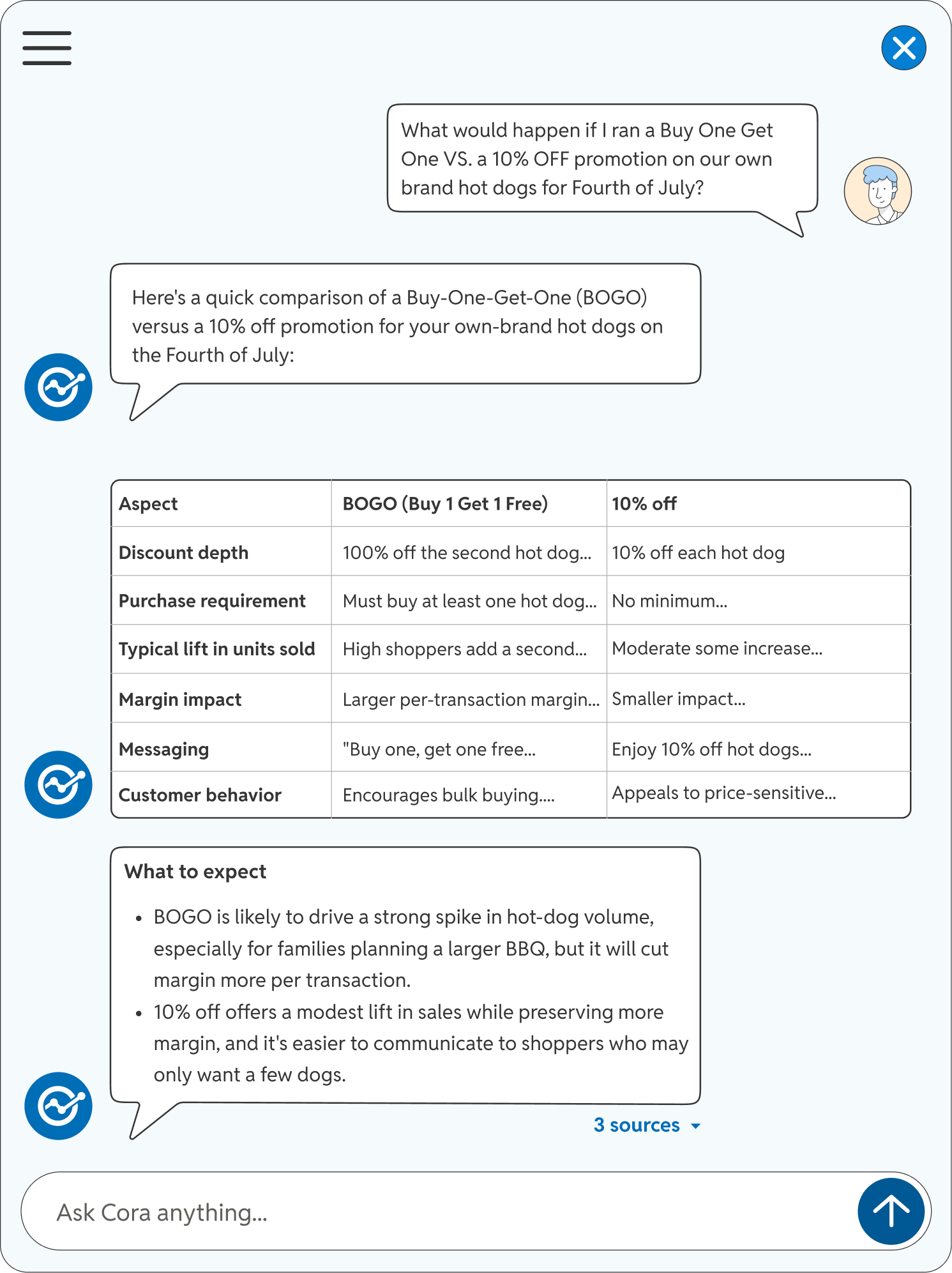
- “What would happen if I ran a Buy One Get One promotion on our own brand of hot-dogs for Fourth of July?”
- “Why is forecasted lift lower than expected?”
- “What happens if I increase vendor funding?”
- “Would a 3 for $10 offer perform better?”
Cora helps planners move beyond the forecast itself. She can explain the factors influencing a promotional forecast, compare different scenarios, and help users understand the trade-offs behind each decision. As these capabilities continue to evolve, planners will increasingly be able to explore alternatives, evaluate ideas, and optimize promotions through a more natural interaction with the software.
Cora complements PromoAI’s forecasting and optimization capabilities by making them easier to explore, understand, and apply.
PromoAI:
Powerful promotion planning and decision support
- Forecasting and scenario modeling
- Rich analytics and reporting
- Decision support
- Structured planning workflows
PromoAI+ Cora
A more capable and intuitive planning experience
- Explain forecasts and explore alternatives naturally
- Ask follow-up questions beyond predefined reports
- Better understand recommendations and trade-offs
- Continue seamlessly from evaluation to execution
From intent to execution
Every planning cycle reaches the same inflection point: the planner has done the analysis, explored the options, and made a decision. Now they need to build the promotion.
In most retail planning software, that means starting over. The insights from the evaluation process live in one place; the execution tools live in another. The planner has to translate what they decided; mentally, manually; into the forms and fields the system requires.
Cora eliminates that gap.
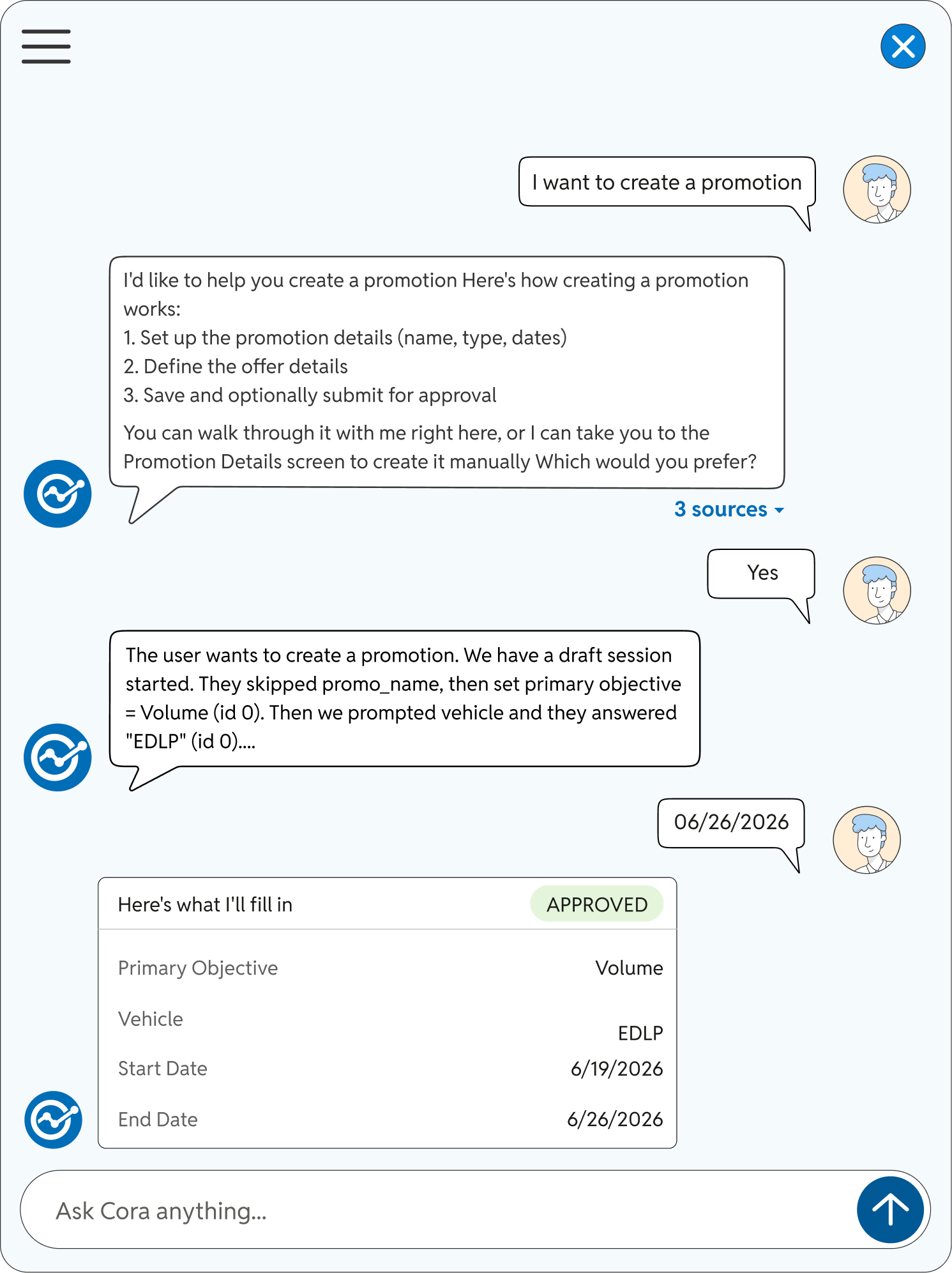
Example: Continuous interaction from analysis to execution
“Create the BOGO promotion on our private label hot dogs for Fourth of July that we just evaluated.”
Cora picks up where the conversation left off. If the information is available, she builds a draft for review. If details are missing, she asks; step by step; until the promotion is ready to go.
The interaction feels natural because it mirrors how planners actually work. Explore an idea. Evaluate the options. Make a decision. Execute it. Cora supports all four stages in a single, continuous thread, reducing the friction between thinking and doing without removing the planner from the process.
This is one of the clearest expressions of how an AI agent can enhance the promotion planning experience: not replacing judgment, but eliminating the administrative work that surrounds it. Planners focus on the decisions. Cora handles the mechanics.
A more capable planning experience
The value of Cora isn’t found in any single capability. It’s found in how those capabilities work together to make PromoAI more useful.
Questions that once required new reports can now be answered naturally. Forecasts become easier to understand and evaluate. Ideas move more quickly from concept to execution. And users spend less time navigating the software so they can focus more on planning exceptional promotions.
“The result isn’t enterprise software with an AI agent attached. It’s enterprise software that becomes fundamentally more capable because an AI agent is part of the experience.” ~ DJ O’Neil, VP of Product at Cognira
That’s the opportunity we see with Cora.
The capabilities available today are only the beginning. As Cora continues to evolve, she’ll help retailers interact with PromoAI in new ways, making the application increasingly capable while keeping planners focused on what matters most: making better promotional decisions.